
What Are Indoor Pools?

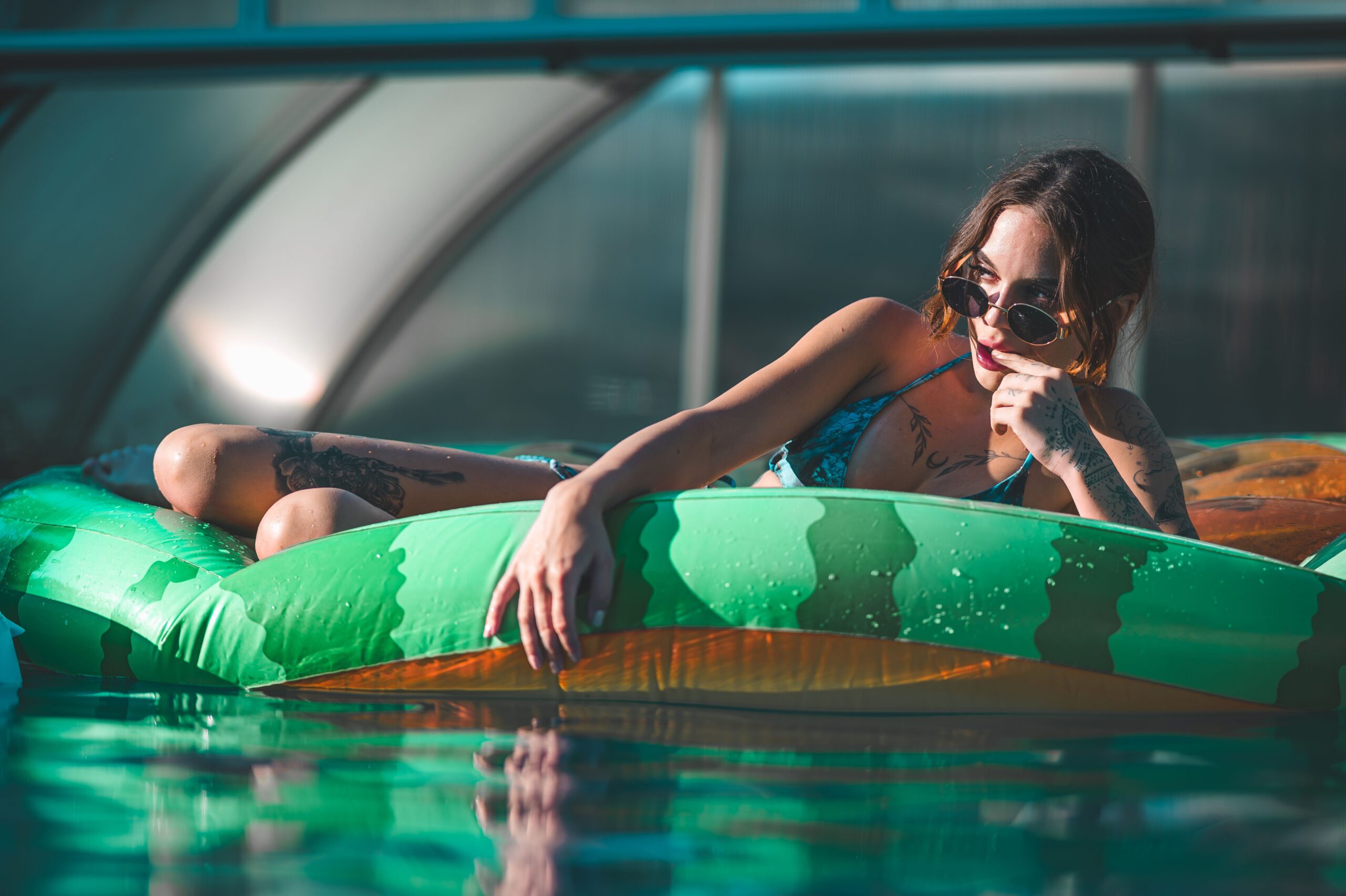
Indoor pools are pools located indoors, usually with a roof on top, unlike outdoor pools. The indoor variety can be found in private residences, hotels, fitness centers, rehabilitation clinics, schools, and recreational centers, among other places. Everything about indoor pools is a structure containing all the required equipment to heat up, ventilate, and dehumidify the swimming pool to satisfy the needs of the swimmers and to protect the building from water-related damage. Indoor pools are different from outdoor pools because they are constructed indoors and have the required equipment to ventilate, heat, and dehumidify.
How Indoor Pools Work
Indoor pools work by circulating and filtering the water in them as well as ventilating and dehumidifying it. In order to do this, the water is passed through pumps and specialized filters that clean the water before putting it back in the pool. The water in the indoor pools is sanitized by using either chlorine or salt to kill germs, bacteria, and other harmful organisms. Considering that water is constantly evaporating from the swimming pool, dehumidifiers and ventilating systems are required to get rid of any unwanted moisture from the air.
Types of Indoor Pools
There are various types of indoor pools, and all types depend on the space, budget, and purpose. The most common types of indoor Pools are
Lap Pools
These are the types of pools that are used for exercising and training.
Recreational pools
Pools of this type are designed for leisure and family use.
Plunge pools
This is a small pool designed for relaxation and hydrotherapy.
Therapy pools
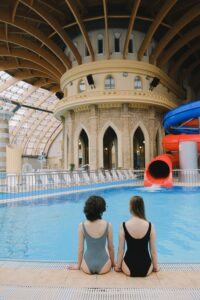
This is the type of pool used in rehabilitation clinics and other similar institutions for therapeutic reasons. Another type of indoor pool is a luxury pool, which has all the special effects included, such as waterfalls and spas.
Benefits of Indoor Pools
An indoor pool can come with lots of benefits and some disadvantages as well. Some of the benefits of an indoor pool are the following:
Swimming all year round
Unlike outdoor pools, an indoor pool can be used all year round regardless of the weather.
Protected from outside elements
Indoor pools, as mentioned above, are located indoors and thus are protected from outside elements such as leaves, insects, and other objects that can get into the pool from outside and cause damage or mess.
Exercising and Keeping fit
Swimming is a great sport, right, and it is good for everybody’s health.
Disadvantages of an Indoor Pool
Even though an indoor pool has lots of benefits, it also has some downsides and disadvantages such as;
Costly to install
An indoor pool can become very expensive to install as compared to an outdoor one.
Need for ventilation
As said above, an indoor pool requires proper ventilation systems in order to get rid of unwanted moisture from the air.
Proper maintenance
An indoor pool is a structure that needs to be properly maintained.
Indoor Pools: Design and Planning
Indoor pool design and planning is a very important procedure and should not be taken lightly since all the details need to be considered in order to come up with a functional, convenient, and low-maintenance concept.
Choosing the Right Pool Size
When choosing the size of the swimming pool, everything depends on how you are going to use it. If you are going to use the pool for swimming laps, then it would be better to choose the minimum size of the pool, which is ten feet in width and forty feet in length. For recreational use, the pool should be a bit bigger so that people can lie in it; the size of the room also plays an important role in choosing the size of the pool. Apart from that, the financial possibilities should also be considered; it is always better to choose the pool size that you will be comfortable and happy to use rather than a too big or a too small one; the latter is also more difficult to maintain.
Indoor Pool Room Design Ideas
When designing the room for the swimming pool, everything depends on how much space you have. The swimming pool should always be placed in a way that it can be accessed from all sides. Apart from that, the bigger the size of the room, the better. Some design ideas for the room with an indoor swimming pool are the following:
Open design
It is always a good idea to make the room as big as possible; an open design concept can help to achieve it.
High ceiling
In an open design concept, the ceiling height should also be high so that the room will not feel stuffy.
Big windows
Since the pool room usually feels narrow and closed, it is a good idea to add some natural lighting by installing big windows.
Comfort
The comfort of the room should also be considered; it is essential to furnish it so that it becomes more comfortable for relaxing.
Lighting and Aesthetics
Lighting is one of the most important elements when designing a room; the right lighting can highlight the objects in the room as well as make it look better and more comfortable. Some lighting ideas for indoor pools are
Natural lighting
Natural daylight is always a good source of light, and it is better than any artificial light since it does not flicker and causes eye strain.
Task lighting
It refers to the lighting that is needed for doing certain tasks such as reading.
Accent lighting
It refers to the lighting that helps to make the room look nice by highlighting certain objects in it.
Decor lighting
Decor lighting is the decoration that also serves as lighting.
Indoor Pool: Construction Process
An indoor pool construction process is quite a complicated one, and it often needs the professionals’ help in order to complete all the necessary stages of the construction. Some of the essential steps when constructing an indoor pool are;

Planning and permits
Before constructing an indoor swimming pool, it is vital to take all the required steps in order to get the necessary permits so that later on, there will be no problems with the law.
Structural requirements
Indoor pools are usually very heavy and therefore, extra care should be taken when choosing the building structure.
Ventilating
Ventilating systems should also be installed when constructing an indoor swimming pool.
Heating and Insulation
When constructing an indoor swimming pool, heating and insulation should also be taken into consideration.
Indoor Pools: Costs Explained
An indoor swimming pool is usually expensive to construct as well as to maintain. There are various costs associated with constructing an indoor swimming pool; they are
Construction costs
All the costs that are related to actually constructing the indoor swimming pool; these costs usually include excavating costs, foundation costs, construction costs, and finishing costs.
Operating costs
All the costs related to operating the indoor swimming pool, such as electricity, water, and maintenance costs.
Maintenance costs
All costs related to maintenance, such as cleaning costs, chemical costs, and repair costs.
Factors That Affect Pricing
Various factors can affect the pricing of an indoor swimming pool; some of them are
Size
The bigger the size, the costs of constructing the pool will also increase.
Design
A more complex design usually means higher prices.
Location
Pools located in different areas can have different prices.
Materials
The quality of materials has an effect on the price as well.
Climate
Depending on the area where the pool will be located, the prices can also vary.
Indoor Pool Equipment and Systems
An Indoor Pool requires a lot of equipment to operate; some of the equipment needed for the operation of an indoor swimming pool is
Filtration systems
Water in the swimming pool gets dirty over time; it gets filled with various types of dirt, impurities, and other particles. In order to clean the water of the pool, it is necessary to install a filtration system.
Pool Pumps
They are essential for moving water from the swimming pool to the filtration system.
Heating systems
In order for the water in the swimming pool to be warm, a heating system should be installed.
Dehumidifiers and ventilation equipment
All the equipment needed to adjust and control the level of humidity in the air surrounding the swimming pool.
Indoor Pool Maintenance Guide
An Indoor Swimming pool requires proper maintenance; some of the essential maintenance tasks for an indoor swimming pool are
Water Testing and Treatment
Water testing is an essential part of the maintenance of the swimming pool; the water should periodically be tested for its overall quality and treated if necessary.
Cleaning Procedures
Cleaning procedures should also be done on a regular basis in order to ensure that the water in the swimming pool is clean and safe for use.
Controlling Humidity in the Pool Room
It is also very important to control the level of humidity in the pool room in order to avoid condensation on the walls of the pool.
Common Maintenance Mistakes
Some of the common maintenance mistakes are;
- Failure to test the water periodically
- Failure to clean the water periodically
- Using the wrong types of chemicals for water treatment
- Not paying enough attention to the pool filters.
Indoor Pool Energy Efficiency
An indoor swimming pool is expensive to operate mainly because of the high energy consumption needed to heat and ventilate it. Some ways to make an indoor pool more energy efficient are
Reducing heating costs
Since the heating costs count for a significant percentage of the operating costs of an indoor swimming pool, those costs should be reduced by lowering the temperature of the water in the swimming pool, improving the level of insulation, and investing in energy-efficient heating systems.
Insulating and Pool Covers
They can also help to reduce the heating costs by reducing the amount of heat loss.
Eco-Friendly Pool Solutions
Making an indoor swimming pool more eco-friendly is also a way of making it more energy efficient. Some of the solutions that will help to make an indoor swimming pool more eco-friendly are the following:
- Using energy-efficient pool pumps
- Using LED Pool Lamps
- Using Solar Panels
- Using Smart Pool Systems
Indoor Swimming Pools Safety Tips
An indoor swimming pool should have lots of safety features in it. Some of the safety tips when it comes to indoor swimming pools are
Child safety measures
Since children can easily get into the indoor swimming pool, various safety measures should be taken to ensure that they will not be able to get into it without supervision. Such safety measures include installing fences and safety barriers, making sure that doors have a self-closing and self-locking mechanism, making sure that the pool has a proper drainage system, and educating children about pool safety.
Slip and Fall Prevention Measures
Those prevention measures include ensuring the surface of the pool is non-slip, installing a drainage system, and keeping the pool area free from any objects that may cause a slip.
Air Quality and Health Considerations
Since most of the indoor pools have poor air quality because they are enclosed spaces, it is essential to improve the air quality around the pool area. Some ways to improve air quality are making sure that there is a constant flow of fresh air, controlling the level of humidity, and installing air purifiers.
Real-World Indoor Swimming Pools Applications
Indoor Swimming Pools can be applied in various places such as;
Residential indoor pools
Indoor Pools can be installed in private residences so that the owners can enjoy swimming in their own private swimming pools.
Fitness centers swimming pools
Outdoor Pools can be equipped with indoor swimming pools so that the clients can also enjoy swimming.
Rehabilitation and therapy Pools
Indoor swimming Pools can be used in rehabilitation clinics.
Indoor Pools Common Problems and Solutions
Various problems can occur when owning an indoor swimming pool; some of the problems that can occur when owning an indoor swimming pool are the following:
Condensation
Condensation is a result of having excessive levels of humidity in the air; the best way to deal with condensation in an indoor swimming pool is to improve the ventilation in the area.
High levels of Humidity
Humidity levels in indoor pools tend to be high, which can be uncomfortable for people who are swimming in them. High levels of humidity can also damage the building that houses the swimming pool. The best way to deal with high levels of humidity is to install dehumidifiers.
Water quality issues
Water quality issues such as high levels of bacteria or impurities in the water can also occur. Water that is cloudy or smelly also indicates that there is a problem with the water quality. In order to solve those issues, it is essential to test the water and treat it if there are any problems.
Equipment failures
Equipment failures in an indoor swimming pool can be a result of many different problems, such as improper maintenance or installation. In order to fix the equipment failure, professional intervention may be required.
FAQs
Are Indoor Pools Worth It?
Yes, they provide many benefits and facilities.
Do Indoor Pools Need Dehumidifiers?
Yes, they do because dehumidifiers are used to bring down the percentage of moisture in the air around the pool.
How Long Do Indoor Pools Last?
Since an indoor pool is a multifunctional structure, it can last a very long time depending on maintenance and other factors.
Conclusion
Indoor Pools have a lot of benefits and facilities that they provide and therefore people consider them to be more worthwhile even though they have various downsides such as a high cost and the need for proper maintenance, all in all, by learning all of the aforementioned details about indoor swimming pools, people can make the best choice when it comes to buying or constructing an indoor swimming pool and by understanding all the details about the design, construction, equipment, maintenance, and others, people can ensure that they will get the best out of their indoor swimming pool.