
What Does “Largest Indoor Pools” Mean?
To answer the question Are the largest indoor pools expensive in the world the first step is to grasp what is considered to be the largest indoor pools. These pools do not resemble the normal indoor pools in residential houses or small gym centers. They are planned at a much bigger scale and tend to need high engineering and extensive indoor areas.
Simple Explanation for Beginners
Largest indoor pools are swimming pools constructed out of enclosed structures that are much larger than regular residential pools. These pools can be in luxury hotels, spacious personal estates, sports clubs, and weather parks.
The largest indoor pools are intended to serve many people simultaneously, as opposed to small indoor pools, which can only be used by a family or a small number of people. They usually have extended swimming pools, depth, and other provisions like relaxation areas or recreational areas.
In simple terms, the largest indoor pool is not a mere swimming facility, but it is typically a big construction venture that involves a fusion of architecture, engineering, and luxury design.
How Largest Indoor Pools Are Measured
The measurement of the largest indoor pools is typically done in consideration of a number of key factors.
Surface Area
One of the primary ways of establishing the size of a pool is through the total water surface. Large pools contain greater quantities of square meters or square feet of water.
Length and Width
In other indoor pools, swimming laps is the primary consideration, and length therefore becomes very important. Olympic-style pools are commonly referred to.
Depth
More water is needed to support the deeper pools, making it more categorized in terms of size.
Total Water Volume
Another measurement is water volume. Millions of liters of water in a pool are considered huge. The largest indoor pools, in many instances, do not just target one factor, but a combination of all these measurements.
Largest Indoor Pools vs Standard Indoor Pools
Normal indoor pools are typically constructed to be used on an individual basis, and they are meant to be installed within an average structure. They range in length between 20 and 40 feet and are not very difficult to maintain. Very different are the largest indoor pools.
They usually need specially prepared buildings with strengthened constructions and high-end climate control. Although an ordinary indoor pool might be affordable, the biggest indoor pools are expensive in terms of funds.
The other significant distinction is intent. Normal indoor swimming pools are constructed primarily to support swimming and relaxation, whereas the largest indoor swimming pools can be used in various capacities, including recreation, training, and luxury. This scale variance is among the major factors that make the biggest indoor pools very costly.
Are the Largest Indoor Pools Expensive in the World?
The given question is one of the most frequent questions that people ask because they want to know whether the highest-indoor pools are among the most expensive swimming pools that have ever been constructed. The response is yes in the majority of cases.
Big indoor pools are considered to be a great investment both during construction and during their lifetime. The price will cover construction of the building, equipments and upkeep of the facility for several years.
Average Cost of Large Indoor Pools
The prices of big indoor pools are different and depend on the size and design. The average size of an indoor swimming pool, when located in a private house or place, could run between 100,000 and 500,000 dollars.
Nevertheless, indoor pools of very large size that are often present in resorts or in other facilities may be costly, in millions of dollars. There are mega indoor pools that are tens of millions, inclusive of construction, architecture, and equipment.
These exorbitant prices are the reason why the largest indoor pools are typically constructed by the well-off or large institutions, but not by the general public.
Why Large Indoor Pools Cost So Much
There are a number of reasons that explain why big indoor pools are costly.
- To begin with, the process of indoor construction is more complicated than the construction outside. The building should ensure that the pool is sheltered against the weather, as well as ensure proper levels of humidity.
- Second, larger pools need more powerful structural support. The construction should be able to support the colossal mass of water.
- Third, there is a need for sophisticated equipment to keep the water clean and comfortable. Control of heating, filtration, and air systems is costly.
As a result of these demands, the prices of the construction of the largest indoor pools are extremely higher than the construction of the outside pools.
Luxury Features That Increase Costs
Luxury options are capable of making even the largest indoor pools very expensive.
These features may include:
- Panoramic view and glass walls.
- Submersible lighting systems.
- Ornamental tiles and finishing.
- Spa areas and hot tubs
- Waterfalls and fountains
The largest indoor pools are built in a way that they give an atmosphere of luxury and not merely a place to swim. These additional amenities are at times equivalent to the pool itself.
Construction and Installation Expenses
One of the highest costs in the process of constructing large indoor pools is the construction.
This normally entails:
- Excavation and foundation work.
- Structural engineering
- Waterproofing systems
- Plumbing installation
- Electrical systems
Moreover, constructing an indoor facility surrounding the pool is very expensive. The roof, walls, and ventilation systems should be well planned to accommodate the changes in moisture and temperature. As a result of these demands, the prices of the construction of the largest indoor pools are extremely higher than the construction of the outside pools.
Factors That Affect the Cost of the Largest Indoor Pools
The overall price of the biggest indoor pools is dependent on a number of key considerations. Awareness of these factors will make one understand why there are indoor pools that are very expensive compared to others.
Pool Size and Depth
The size is the most obvious cost determinant. Bigger pools demand more materials, a larger amount of labor, and more water. A twice-larger pool may be a lot more expensive due to structural considerations. Her depth is also significant. In the deeper pools, the foundations are stronger and require more water, that is necessitating the construction and maintenance being expensive.
Building Materials
The building of the indoor pools is very reliant on the material that was used to erect the building, and consequently on the general price. Durability Strength and quality materials such as reinforced concrete, natural stones, and good tiles are expensive yet durable. Most of the largest indoor pools are made of high-quality materials so that they can last longer and look good.
Heating and Ventilation Systems
Indoor swimming pools demand restricted temperatures and air circulation. The water is made comfortable all year round by heating systems. The ventilation systems help to dry the air and avoid building destruction. Unless adequately ventilated, indoor pools might become moldy and experience structural issues. These systems are mandatory yet costly.
Maintenance Requirements
Maintenance is one of the long-term costs. Large indoor pools require:
- Regular cleaning
- Chemical treatment
- Equipment servicing
- Energy use
The bigger the pool, the more costly it would be to maintain. The maintenance costs will, and will in the long run, be equivalent to the original construction cost and even higher.
Real Examples of the Largest Indoor Pools
And the discussion of practical examples can make large indoor pools appear more understandable as to why and how they are costly to construct.
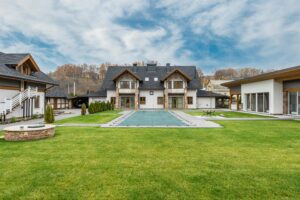
Citystars Sharm El Sheikh Pool
This is one of the largest indoor pool complexes in Egypt, that are frequently referred to as the largest indoor swimming facility. It was designed in a luxury development and comprises very large water spaces that are covered with indoor structures. Such projects involve massive engineering and construction costs and are therefore among the most expensive indoor pools in the world.
San Alfonso del Mar (Indoor Sections)
Although this resort is well known because it has an outdoor lagoon, there are also enclosed swimming areas. These indoor areas display the combination of indoor and outdoor pools in large resorts, which allow swimmers to spend all year round. Such projects require time, and the scale of the project shows that the cost is escalated with an increase in pool size.
World Waterpark
This is an indoor water park placed within the boundaries of one of the biggest shopping malls in the world and comes with a giant swimming pool, cloaked by a massive roofing framework. Such facilities need a sophisticated engineering and climate control system. They are good illustrations of the integration of recreation and massive construction in indoor mega pools.
Benefits of the Largest Indoor Pools
The biggest indoor pools have numerous benefits, even though they are very expensive, making them good investments.
Year-Round Swimming
The opportunity to go swimming any time of the year is one of the best opportunities. The indoor pools are not prone to weather conditions like rain, cold, or high temperatures from the sun. This renders them suitable in the unpredictable climatic regions.
Luxury Experience
There is a lot of luxury with large indoor pools. The swimming environment is also enhanced by the use of expansive designs, proper lighting, and quality materials. Many people find it comfortable and prestigious to go to the largest indoor pools.
Increased Property Value
The large indoor pools have the capacity to enhance property value, particularly in luxury houses and hotels. The interior pool will be designed in such a way that it will increase the attractiveness of a property to buyers and visitors. The value rise, however, is determined by the location and quality of design.

Entertainment and Recreation
Socialization and recreation replace huge swimming pools. The visitors, families, and tourists will have time to have fun with other people, swim, and spendthe rest of the time. This has made them popular, especially in resorts and recreational centers.
Challenges of Building the Largest Indoor Pools
The challenges are also serious; however, the construction of the largest indoor pools is equally impressive in terms of the advantages.
High Construction Costs
It has a very high cost of construction. Large indoor swimming pools require specialized engineers, architects, and builders. This renders the initial outlay very huge.
Energy Consumption
Indoor pools are very energy-consuming. The process of heating water and keeping the interior temperatures necessitates the use of energy at all times. Huge facilities could have enormous monthly bills for energy.
Maintenance Complexity
Some technical knowledge is required to keep large indoor pools of large size. The machinery should also be regularly inspected to make sure that the water is clean and safe. It requires professional upkeep.
Space Requirements
Big indoor swimming pools are space-consuming. The pool and other equipment should be placed in a building large enough to accommodate them. This complicates construction in the limited areas of land.
Largest Indoor Pools vs Outdoor Mega Pools
The comparison of the indoor and outdoor mega pools would allow clarifying the costs and advantages of these pools.
Cost Differences
In indoor mega pools, one can also expect higher prices compared to outdoor mega pools. The indoor structure is very costly for the building. There are also increased costs of the climate control systems. These are some of the costs that outdoor pools will evade.
Maintenance Comparison
The technical maintenance of indoor pools is more likely. Systems of ventilation and humidity control should be monitored. The primary jobs that are conducted in outdoor pools are cleaning and repairing the water.

Long-Term Value
Indoor pools are also long-term pools since they can be used all year round. Weather conditions may restrict outdoor pools. Incidentally, this renders indoor pools more valuable in certain circumstances.
How to Reduce the Costs of Building Large Indoor Pools?
The big indoor pools are expensive, yet they can be managed to take care of the costs.
Smart Design Choices
Effective designs have the ability to lower the cost of construction. Strauss shapes and effective designs tend to be less costly to construct. Boosted designs become expensive. By planning, unwarranted expenditures can be avoided.
Energy-Efficient Systems
Energy-saving machines save on the long-term costs. The current heating systems consume less energy. Temperatures are also well maintained through better insulation. In the long run, the amount of energy saved may be substantial.
Choosing Affordable Materials
Initial costs can be minimized by using cost-effective materials. Good values include the use of durable yet cheap materials. The high-end materials must be utilized when necessary. The budget is regulated with balanced selections of materials.
Who Should Build the Largest Indoor Pool?
Not every person can use the largest indoor pools. They suit the individuals and organizations well because they can afford the expenses.
Luxury Homeowners
Rich homeowners occasionally construct massive indoor swimming pools as part of their luxury homes. Such pools are private and comforting. But they need a continuous financial investment.
Hotels and Resorts
Large indoor pools are usually advantageous to hotels and resorts. The indoor pools are a guest enticement and help to boost occupancy. They are also capable of operating all year round.
Sports Facilities
Large indoor pools are used in sports facilities for training and competition. The indoor environments provide a uniform environment for the athletes. Organizations or governments normally fund the funds of such pools.
FAQs
Are the Largest Indoor Pools Worth the Cost?
Large indoor pools can prove valuable to an individual or organization that will utilize them regularly. They are easy, comfortable, and can be utilized in the long run. They, however, ought to be budgeted.
How Much Does the Largest Indoor Pool Cost?
The largest indoor pools can cost millions of dollars or even tens of millions of dollars, depending on the size and design. There can be hundreds of thousands that are spent on small indoor pools.
Are Large Indoor Pools Hard to Maintain?
Big indoor pools should be taken care of on a regular basis. Small pools are simpler to maintain compared to the large ones; however, with planning, one can manage the maintenance.
Can Homes Have Large Indoor Pools?
Yes, huge indoor pools may be constructed in residential areas provided that there is sufficient space and money. In luxury houses, large indoor pools are a specialty sometimes.
Conclusion
The most impressive swimming facilities that have been constructed are the largest indoor pools. They are unique in the sense of their huge size, sophisticated engineering, and luxurious features, unlike ordinary pools.
The question: Are the largest indoor pools expensive in the world? can usually be responded to as a resounding yes. These pools amount to huge financial investments in terms of their cost of construction, equipment, and maintenance.
Nevertheless, their advantages, such as use all year round, comfort, and long-term value, makeite worth the consideration of some homeowners and organizations.