
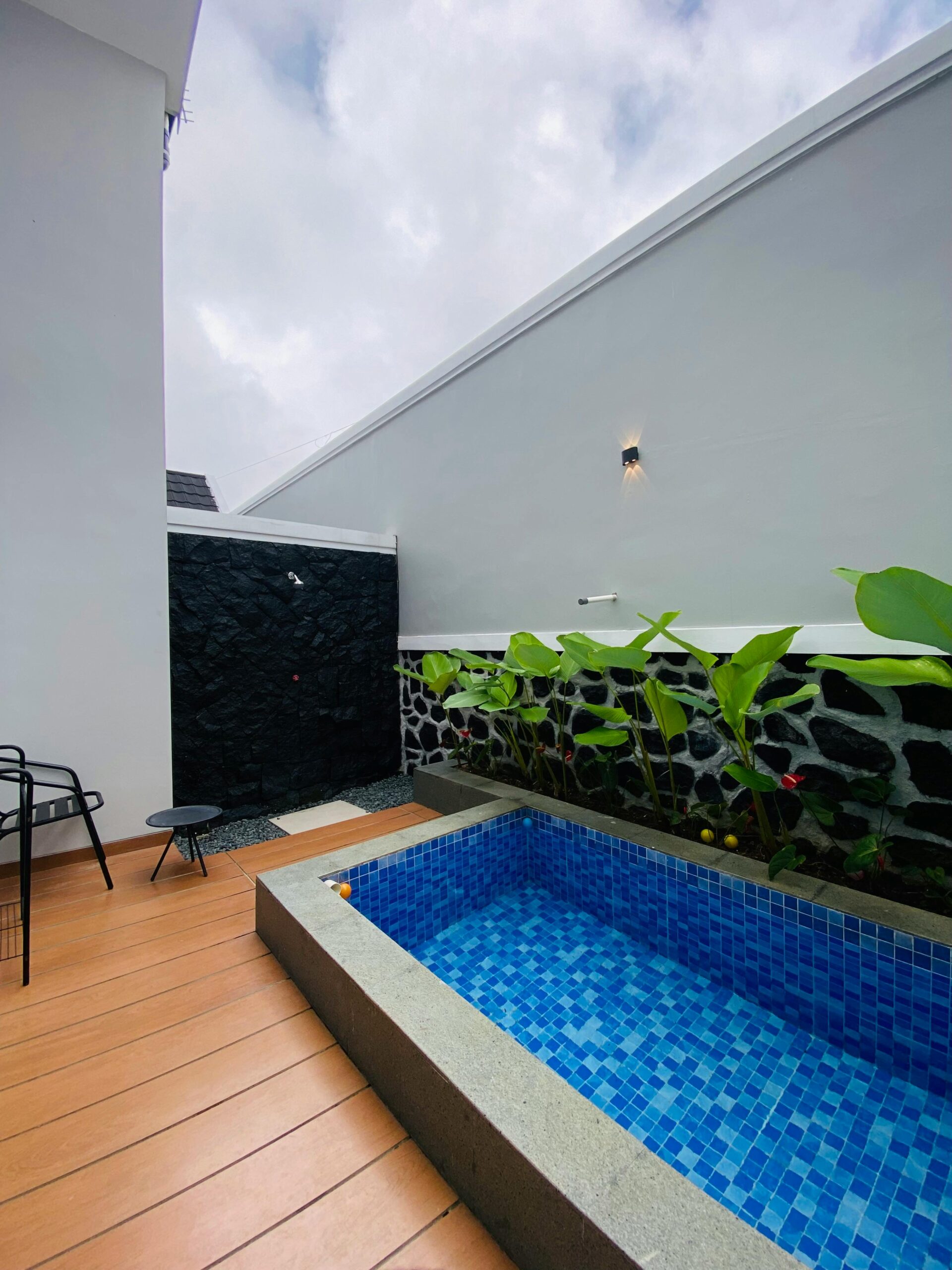
What Is a Compact Space-Saving Indoor Pool?
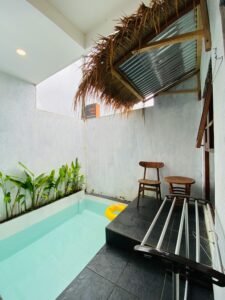
A Compact Space-Saving Indoor Pool is a special-purpose swimming pool constructed indoors within a home, but with the minimal amount of space being used. These pools are also designed to fit in smaller spaces like basements, extra rooms, extensions, or covered patios, but not to overcrowd the home, unlike the big traditional indoor pools.
The primary aim of a small indoor pool is to enjoy accessibility and the comfort of swimming throughout the year, and utilize as much space as possible. The contemporary designs are designed for efficiency, intelligence, and versatility, so homeowners can have a pool even in a small space.
Small indoor pools are gaining popularity in contemporary houses where space is a luxury. Even a small indoor pool can appear classy and offer good functionality even without a massive piece of land with proper planning.
Simple Explanation for Homeowners
To put it simply, a compact space-saving indoor pool refers to a small swimming pool constructed in the house that is created to fit within the limited space.
These pools are made to fill smaller spaces compared to the large indoor pool room that requires a lot of space, yet they offer a comfortable swimming experience. They suit well with the homeowners who have the desire to enjoy the advantages of an indoor pool without losing excessive living space.
A small indoor swimming pool may be utilized in:
- Relaxation
- Light exercise
- Family enjoyment
- Year-round swimming
It is not about constructing the highest size pool, but a pool that is just right in the available space.
Key Features of Compact Indoor Pools
Compact indoor pools are not similar to regular pools in that they are planned in terms of efficiency. All the elements of the design are aimed at space-saving, while still being comfortable and practical.
Smaller Dimensions
Small indoor pools tend to be smaller and less wide compared to regular pools. They are made in such a way that they fit in a small space without consuming much space.
Smart Layout Design
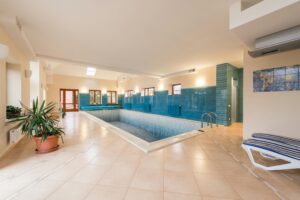
The design is well calculated in such a way that the pool should fit within the space. There are always corners, walls, and unused corners that could be utilized as viable pool sites.
Multi-Functional Spaces
Numerous small indoor pools are included in rooms with more than one use. As an illustration, the same room can be used as:
- A relaxation area
- A small home gym
- A seating area
This renders the space more functional.
Efficient Heating Systems
Being smaller in size, the pool will take less energy to heat. This renders small indoor pools more efficient in terms of energy than large indoor pools.
Modern Materials
Compact pools are normally fitted with modern materials, such as the use of glass panels, smooth tiles, and moisture-resistant finishes to create a clean and attractive appearance.
Indoor Pools Compared to Traditional Indoor Pools
The knowledge of the distinction between compact and traditional indoor pools assists the household in making the appropriate decision.
Space Requirements
The old-fashioned indoor pools consume a lot of space in the form of rooms and floors. Small swimming pools are made to accommodate small spaces and ensure they are useful.
Installation Complexity
Indoor pools are typically large and necessitate significant alterations. Smaller pools may be installed with fewer alterations.
Cost Differences
Indoor pools are generally costly due to the size and construction of the traditional ones. Smaller indoor pools tend to be cheaper as they are smaller and less complicated to install.
Energy Usage
The bigger pools are more costly to keep warm. Compact pools are efficient in terms of the use of water and energy.
Practicality
The best kind of pool to be installed in a majority of modern houses is the compact indoor pools as they offer the appropriate balance of comfort and space.
Advantages of a Small Space Saving Indoor Pool
There are various benefits of installing a small swimming pool in the house, particularly among those who have a tight area. These pools enable individuals to have the luxury of swimming indoors but without having to acquire a large estate. An intelligently planned small pool will enhance the livelihood and practicality of the home and can still be a functional and useful item.
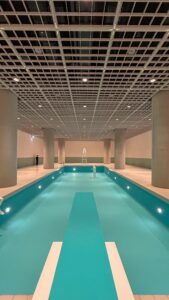
Efficient Use of Limited Space
Compactness of an indoor pool is one of the major benefits of a small indoor pool because it utilizes the available space quite well. Homeowners can convert areas that are not used to gorgeous and useful pool spaces.
Small pools may be placed in such areas as:
- Basements
- Spare rooms
- Enclosed patios
- Small extensions
The clever planning will mean that the pool does not make the home look dense.
Year-Round Swimming Comfort
The indoor nature of the pool also ensures that it can be used at any given time of the year. Indoor pools are not influenced by weather conditions, and therefore the house owners can swim even when:
- Winter
- Rainy seasons
- Hot summers
That is why indoor pools are more credible compared to outdoor pools. The conditions of the temperature and water may also be regulated without any difficulties, and this way will produce a comfortable environmentforn swimming all year round.
Improving Home Value
A nice, small indoor pool may add value to a house. Indoor pools have been viewed by many buyers as a luxury feature, especially when a pool is created to fit in the house naturally.
A compact pool can improve:
- Property attractiveness
- Modern appearance
- Lifestyle value
Home can be identified in the real estate market even by small indoor pools.
Low Maintenance Advantages
Small pools inside are normally easier to maintain compared to the larger ones. They have less water content, which means that cleaning and chemical balancing are not difficult.
Smaller pools tend to need:
- Less cleaning time
- Fewer chemicals
- Lower heating costs
This renders them an option for homeowners who want to have a pool without having to invest a lot in its maintenance.
Types of Compact Space-Saving Indoor Pools
Compact indoor pools come in a variety of types, and each of them fits various homes and requirements. The selection of the type is determined by the space, budget, and individual tastes.
Small Plunge Pools
Plunge pools are one of the most popular compact indoor pool options. These are small and deep pools that can be relaxed in as opposed to full swimming. They are superb for owners of homes whose primary purpose is to cool down and relax. Plunge pools are suitable in low space settings (interiors) since they occupy very little floor space.
They are often used for:
- Relaxation
- Light exercise
- Hydrotherapy
Plunge pools can be quite luxurious, even though they are small in size, provided they are well designed.
Narrow Space Indoor Lap Pools
Lap pools are long and narrow swimming pools in a straight line. They fit well into small spaces where space is minimal, but length is not.
Lap pools are ideal for:
- Exercise
- Fitness swimming
- Daily routines
They are able to accommodate along the walls or even a hall-like area due to their shape.
Basement Indoor Pools
Compact indoor pools are likely to be found in basements. Given the fact that basements are not used frequently, they can be transformed into useful pool areas.
Basement pools provide:
- Privacy
- Efficient space use
- Quiet environment
Basement installations are supposed to be well-ventilated and waterproofed.
Modular Indoor Pools
Prefabricated pools are known as modular indoor pools, and they can be installed within a short time. They are constructed in blocks and fitted within the house.

The popularity of these pools is due to the following:
- Faster installation
- Flexible sizes
- Lower construction time
An example of this is the modular pools, whose construction is not that complicated and can be utilized by homeowners who wish to have a small pool indoors.
Best Compact Space-Saving Indoor Pool Design Ideas
The design is significant in ensuring that a small indoor pool does not look small and crowded. Even a small area of the pool can appear open and welcoming due to the right design decisions.
Minimalist Indoor Pool Designs
Minimalist designs are effective when the size of an indoor pool is small. There is also the use of neutral colors, straight lines, and minimal shapes in the space, which makes the space appear larger.
Minimalist pools are likely to comprise:
- Simple rectangular shapes
- Light colors
- Smooth surfaces
The unnecessary decorations are avoided so that one is able to preserve a spacious feeling.
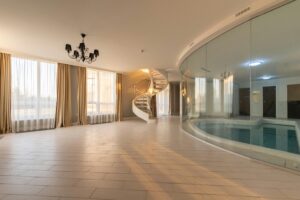
Glass-walled indoor pools
Glass walls can even make a small indoor pool look larger than it is. Clear surfaces would also allow movement of light freely within the space, hence providing a light and spacious environment. The pool can also be linked with the rest of the kitchen by the use of glass walls, and at the same time be separated.
Multi-Purpose Pool Spaces
In smaller houses, pool rooms will frequently be required to perform more than just one role.
A pool area can also include:
- Seating areas
- Relaxation spaces
- Exercise equipment
Functional consolidation assists in the good utilization of the available space.
Folded of Hidden Pool Designs
Certain contemporary small pools are either covered or concealed when they are not in use.
Examples include:
- Sliding floor covers
- Foldable decks
- Retractable covers
These designs will enable the same area to be utilized in various activities.
How to Design a Space-saving Indoor Pool
The most significant stage in the construction of a compact indoor pool is planning. When the pool is planned adequately, it will be able to fit well in the house without any space or structural issues.
Choosing the Right Location
The choice of location will have enormous differences in the practicability of the pool.
Good locations include:
- Basements
- Extensions
- Ground floor rooms
The place must have an adequate area for the pool and maneuvering around it.
Space Planning Tips
Planning for space restrictions will prevent congestion.
There should be room to:
- Walking areas
- Equipment
- Seating
A little pool area must be made comfortable to move around.
Ventilation and Humidity Control
Wetness produced in the indoor pools ought to be controlled. Without good ventilation, moisture can deteriorate the walls and ceilings.
Good ventilation systems are helpful:
- Reduce humidity
- Prevent mold
- Protect the building
- Lighting Solutions
- Lighting is good to enhance safety and aesthetics.
Indoor pools are best suited with natural li,ght as it gives the pool the impression of openness.
Lighting Solutions
Light Artificial lighting may consist of:
- Ceiling lights
- Wall lights
- Underwater lights
The lightwell-balancednced to bring out a relaxing mood.
Compact Space-Saving Indoor Pool Size Guide
To make optimal use of available space, the appropriate pool size has to be selected.
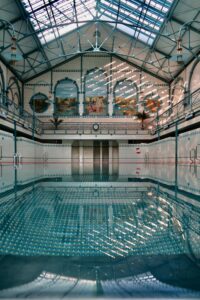
Minimum Space Requirements
A small indoor pool will not need a huge area. Small pools may even occupy small areas and be useful. The pool should be spacious enough to walk around without the danger of falling in.
Ideal Pool Dimensions
Numerous small indoor swimming pools have an average size to be used in a comfortable way. Common small pools are created to enable someone to relax and to swim leisurely, as opposed to swimming competitively.
Pools for Very Small Homes
Planning can ensure the installation of small indoor pools in even very small homes. Even in very small pools, relaxation and enjoyment can be experienced without consuming excessive space.
Cost of a Compact Space-Saving Indoor Pool
The knowledge of costs enables homeowners to plan their projects realistically.
Average Installation Costs
The prices are different according to design and materials. Small pools are usually cheaper than large indoor pools.
The installation cost typically comprises:
- Construction
- Equipment
- Finishing
Budget-Friendly Options
Certain alternatives are cost-reducing.
These include:
- Smaller pool sizes
- Simple designs
- Prefabricated pools
Indoor pools are cheaper and more affordable.
Factors That Affect Cost
Total cost depends uponseveralf factors.
These include:
- Pool size
- Materials
- Location
- Equipment
Tight budgeting allows the management of costs.
Maintenance Tips for Compact Indoor Pools
Small indoor swimming pools are maintained regularly and are clean and efficient.
Cleaning and Water Care
There should be a balance of water. Cleaning up on a regular basis will ensure safe swimming.
Managing Humidity
The construction will be protective in terms of regulating the humidity. Dehumidifiers and ventilation systems may come in handy.
Common Mistakes to Avoid
The time and money could be saved as the common mistakes could be avoided.
Poor Space Planning
The lack of planning may turn the swimming pool into an uncomfortable place. Layouts and proper measurements are essential.
Inadequate Ventilation
The moisture can be caused by poor ventilation. Always correct systems are to be installed.
Oversized Pool Design
An excessively large pool will decrease the living space. Small structures tend to be more convenient.
Who Should Install a Compact Space-Saving Indoor Pool?
Small-scale indoor swimming pools can suit most categories of homeowners.
Small Homeowners
Indoor pools can be designed in sa mall space so that people can also enjoy them.
Urban Houses
In city houses, there is not much outside space available, and indoor swimming pools are a viable choice.
Luxury Small Homes
Even the smaller luxury houses may have smaller indoor pools as one of the premium features.
Compact Space-Saving Indoor Pool vs Regular Indoor Pools
Making comparisons assists decision-making among owners of homes.
Space Requirements
Small pools take up less space than normal indoor pools.
Cost Differences
Small pools tend to be cheaper to acquire and service.
Practical Benefits
Small pools provide a decent strike between comfort and space utilization.
FAQs
How Much Space Is Needed for a Compact Indoor Pool?
Even small indoor pools can be installed in rather small spaces if they are properly planned. Safe movement and equipment should have enough space.
Are Compact Indoor Pools Too Costly?
Internal pools that are small are less expensive than the large indoor pools, but the prices differ depending on the design and the material to be used.
Are There Indoor Pools in Small Houses?
Indeed, indoor pools can be built in small houses provided that space is managed effectively.
Do Compact Pools Add Home Value?
Properly planned small pools may enhance the attraction of a property.
Conclusion
A compact space-saving indoor pool can be a good example of an addition to the home, especially for homeowners who would like to enjoy the comfort of having an indoor pool without having to spend on a big property.
Such pools offer them year-round space efficiency and easy maintenance needs. Even the small homes would be able to have a beautiful and working indoor pool with careful design and planning.
To many homeowners, a small indoor pool is the best way to strike a balance between luxury and practicality; it is a good investment when space is a constraint.