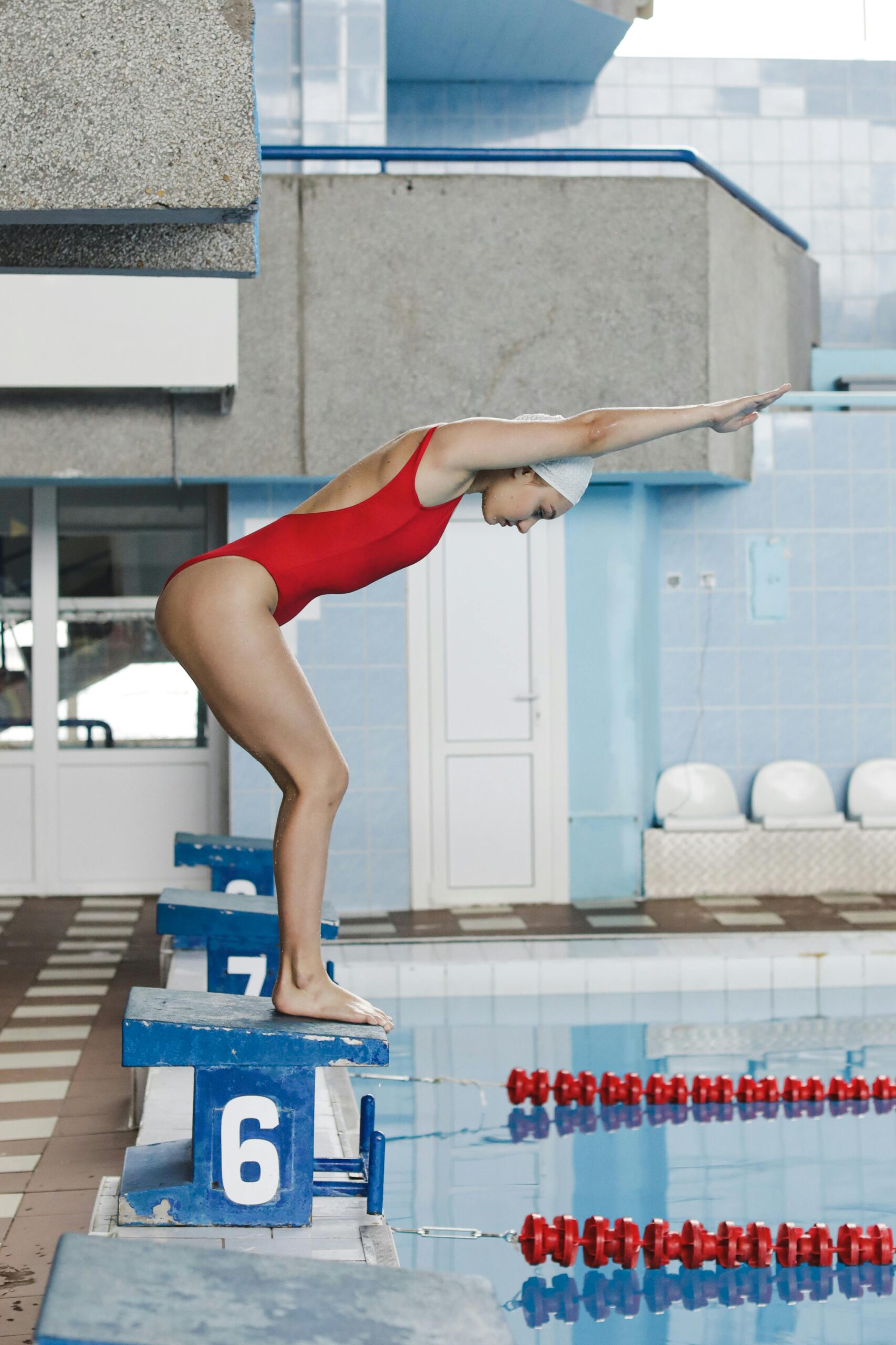
What is an indoor Olympic-size pool?
An indoor pool is an Olympic-size swimming pool, a competition level swimming swimming pool built to the requirements of an actual Olympic and international swimming competition and installed in a fully closed and climate-conditioned building. It is not a typical recreational or lap pool but rather a professional training, national competitions, and international events swimming pool.
Since it is an indoor facility, the facility cannot just focus on dimensional requirements. It also needs to regulate humidity, air quality, temperature, acoustics, lighting, and spectator experience at the same time while ensuring a high level of competition compliance. It is, in a way, a high-performance sports venue, as well as a complicated engineered building.
Official Olympic Pool Dimensions
An Olympic-size pool that is utilized in a competition should measure:
- Length: 50 meters
- Width: 25 meters
- Minimum Depth: 2.0 meters (in modern plants, it is frequently 23 meters)
- Water Volume: 2.5 million liters.
The pool should have 8-10 competition lanes that are well measured to offer fairness. Touchpads are normally placed at both ends to have precision in timing, and an extra area is usually provided outside the initial and final lanes to minimize the interference of the waves. These dimensions are not very flexible. Any slight deviation can cause a facility to be disqualified from hosting sanctioned events.
FFINA Competition Standards and Regulations
The global swimming activities are under the World Aquatics (its previous name was FINA). Their regulations define:
- Size and tolerances of pools.
- Starting block specifications.
- Timing and touchpad systems
- Water temperature range (25°C–28°C)
- Wave-reduction standards of lane ropes.
- Intensity of lighting used in broadcast events.
This obedience is the way to make sure that the times reached in the pool are registered. As far as competitive institutions are concerned, certification is the key – without it, national or international meets cannot be hosted in the facility.
Indoor vs Outdoor Olympic Pools
Though the indoor and outdoor Olympic pools are of the same size, there are some distinct advantages to the indoor facilities:
- Use all year long regardless of the weather.
- Regulated water and air temperatures.
- Less debris and contamination.
- Enhanced spectator comfort
- Lighting conditions friendly to the broadcast.
Nevertheless, indoor pools need much more engineering. They are much more complicated and costly than outdoor facilities with humidity control, ventilation, and structural corrosion resistance.
Indoor Olympic-Size Pool Dimensions and Specifications
Knowledge of the technical specification should be held before the construction is planned to take place, as all of the measures influence performance, safety, and compliance.
Length, Width, and Depth Requirements
- Length: 50 m with touch pads.
- Width: 25 meters minimum
- Depth: Competition requires at least 2 meters of depth.
The contemporary competition swimming pools tend to go to a depth of 3 meters. More profound water minimizes turbulence and bouncing of waves, enhances the swimming speed, and results in faster times.
Number of Lanes and Lane Width
- Standard competition lanes: 8
- Preferred design: 10 lanes
- Lane width: 2.5 meters each
The outer two lanes serve as buffer lanes to absorb the energy of the waves. Lane ropes are specially designed to have anti-wave technology to reduce the interference among swimmers.
Water Temperature Standards
For competition:
- 25°C to 28°C (77°F–82.4°F)
Training pools can also have a slightly different temperature than the preference of the athletes. Stability of temperature is vital; even a minor change can affect the performance and stamina of muscles.
Ceiling Height and Building Clearance
Vertical clearance: Indoor Olympic facilities need a lot of vertical clearance:
- Maximum recommended minimum ceiling height: 7-10 meters.
- Diving blocks and broadcast lighting rigs have a higher clearance requirement.
Ample height would allow proper air circulation, less condensation, and a better spectator experience.
Olympic-size Indoor pool design requirements
An environmental engineering project, like that of the construction of an indoor Olympic-sized pool, would require the participation of architects, structural engineers, mechanical engineers, and aquatic consultants.
Structural Engineering Considerations
The pool building should support:
- Millions of liters of water weight
- Hydrostatic pressure
- Dynamic wave forces
- Movement of the soil or the seismic (depending on the location)
The most popular structural material is reinforced concrete. Expansion joints and crack control systems need to be properly developed to avoid leaking in the long run.
HVAC and Dehumidification Systems
Constant evaporation is produced by indoor pools. Humidity can be controlled without control:
- Damage structural steel
- Corrode mechanical systems
- Create mold growth
- Newsworthy reasons bother athletes and spectators.
An expert natatorium HVAC delivers:
- Air temperature (generally 1-2 C more warmer than water temperature)
- Relative humidity (50–60%)
- Movement of air over the surface of the water.
It is among the costliest and most important systems in the facility.
Ventilation and Air Quality Standards
The chloramines (complexes formed between chlorine and the contaminants) may be present on the water surface. At the deck level, proper airflow design eliminates these irritants and provides fresh air in the area to protect the respiratory health of swimmers.
Lighting and Acoustics
Competition pools require:
- Glare-free LED lighting, high-lux.
- Even lighting to enable clarity of broadcast.
- Anti-echo acoustic therapy.
Natatoriums are very reflective spaces that are indoors. Sound panels minimize the amount of noise generated.
Spectator Seating Design
Olympic facilities may consist of:
- Tiered seating
- Media platforms
- Accessible seating zones
- Athlete warm-up areas
Sightlines should be well-designed to guarantee clear sightlines.
Indoor Olympic-Size Pool Construction Process
A building has a systematic order.
Site Planning and Foundation Work
The stability of soil is determined through geotechnical analysis. Excavation must account for:
- Pool depth
- Mechanical trenches
- Drainage systems
Long-term settlement is prevented by proper subgrade preparation.
Pool Shell Construction
The shell of reinforced concrete is filled with tight dimensions. Competition certification depends on accuracy at this point.
Waterproofing and Tiling
Waterproofing covers are used before the application of tiles. Tiles can be of high-grade ceramic or glass, which are durable, visible, and easily maintained.
Mechanical and Filtration Systems
Systems include:
- High-capacity pumps
- Sand filters or regenerative filters.
- Chemical dosing automation
- Heat exchangers
Redundancy is usually designed to avoid downtimes during huge events.
Timeline for Completion
The average time an indoor Olympic-sized pool facility takes:
- 18-36 months to commence and finish.
Competition venues of a large size can be difficult to set up.
Indoor Olympic-Size Pool Cost Breakdown
Prices are highly regional and complicated.
Construction Costs
Building on a base may take:
- $3 million to $10+ million
Large competition facilities can be in excess of 20 million dollars.
HVAC and Environmental Control Costs
Very often, 25-35 percent of the total project cost is due to special equipment that is not easily corroded.
Maintenance and Operating Expenses
Annual operating expenses are:
- Staffing
- Chemicals
- Routine repairs
- Equipment servicing
These may go up to hundreds of thousands per year.
Annual Utility Expenses
The consumption of energy is high, owing to:
- Water heating
- Air heating
- Dehumidification
- Lighting
It can be more cost-effective to use energy-efficient systems.
Maintenance and Operational Requirements
Performance in the long term is a matter of maintenance discipline.
Daily and Weekly Maintenance
Includes:
- Water chemistry testing
- Deck cleaning
- Filter backwashing
- Equipment inspections
Water Treatment Systems
The chemical controllers are automated to maintain safe chlorine and pH levels and can minimise the generation of chloramine.
Energy Saving Measures
- Heat recovery systems
- Variable-speed pumps
- Pool covers during downtime
- LED lighting
Renovation Planning over the Long-Term
After 10-20 years, significant renovations may be performed, which may include the replacement of tiles and mechanical improvements.
Real-World Applications of an Indoor Olympic-Size Pool
Schools and Universities
Fund collegiate sports, student recruitment, and community activities.
Professional Training Centers
Elite swimmers have used it in year-round high-performance training.
Community Recreation Facilities
Swim lessons and local competitions, fitness programs.
International Competition Venues
Host national trials and world championships.
Indoor Olympic-Size Pool Regulations and Safety Standards
Building Codes
Should be in accordance with local structural, fire, and mechanical codes.
ADA Accessibility Requirements
Facilities must provide:
- Pool lifts or sloped entries
- Accessible locker rooms
- Designated seating areas
Lifeguard and Safety Equipment Standards
Includes:
- Rescue equipment
- First aid stations
- Clear deck markings
- Emergency action plans
FAQs
How expensive is an indoor Olympic-sized pool?
This usually lies within the scope of 3 million to 10 million; however, it may hit very high figures in the high-end competition venues.
What depth is an indoor Olympic-size pool?
These demand a minimum depth of 2 meters, but others that are being developed today have a minimum depth of 3 meters, which provides the unit with improved performance.
What is the construction period?
Design and commissioning of most projects take 18 to 36 months.
How high a ceiling do we need?
Typically between 7 and 10 meters, depending on the competition and ventilation needs.
Conclusion
An indoor Olympic-sized swimming pool is much more than a 50-meter swimming pool. It is a highly tuned performance atmosphere that aims at satisfying high international standards whilst providing thermal comfort to the athletes, enthusiasts, and efficiency.
Whether it is precise measurements and regulatory requirements or HVAC design and lifecycle maintenance, each detail should align with the rest. Though the initial cost will be large, these structures are long-term assets -they will be used to promote sporting excellence, community building, and international sporting competition over decades.