
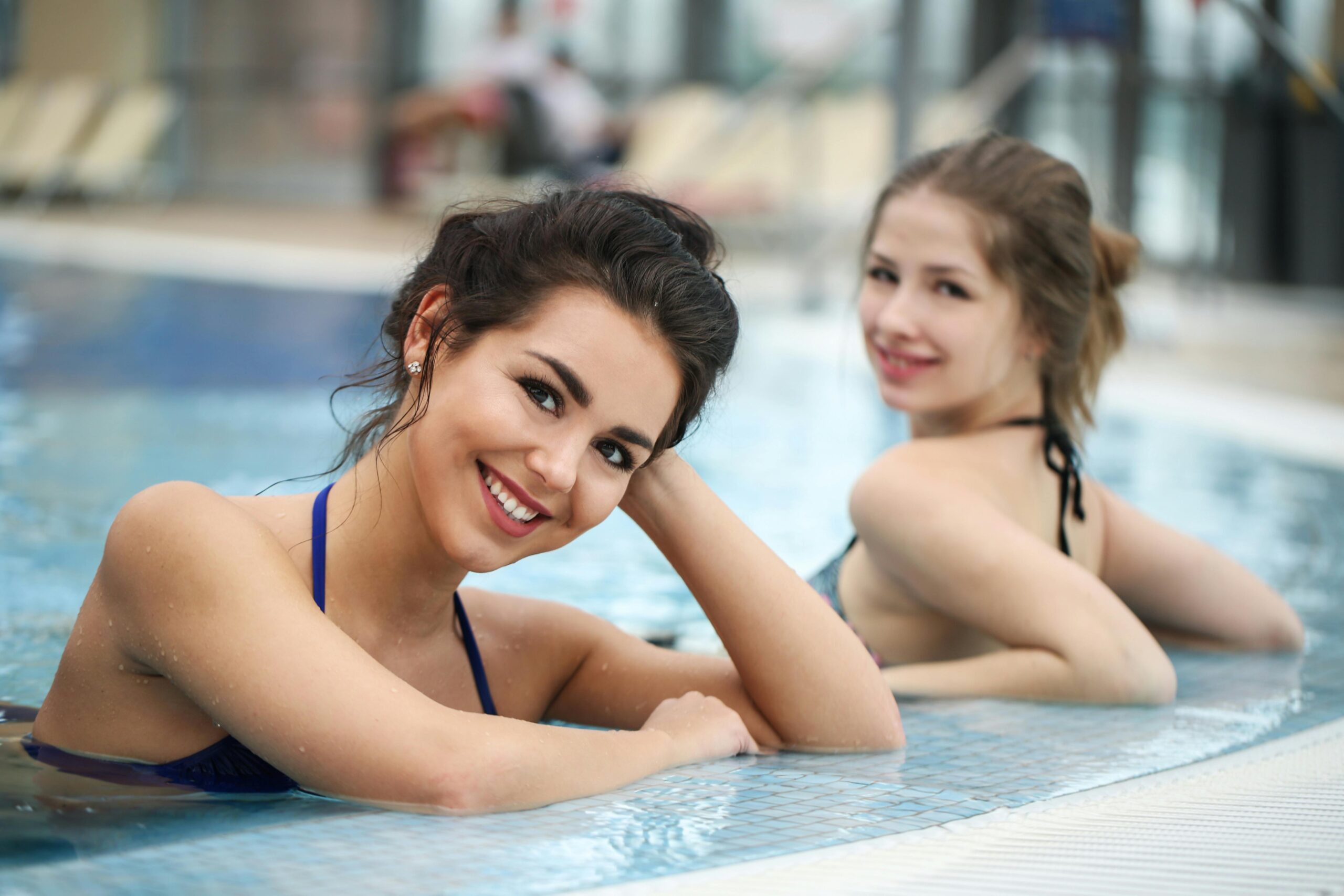
What makes a pool indoor? A Synopsis

An indoor pool is not limited to a roofed pool. The purpose of making the pool look like an indoor one is that it is surrounded by a restricted indoor environment. An indoor swimming pool is a swimming pool absolutely enclosed in a building and equipped with mechanisms to control the temperature, humidity, light, and air quality. It does not have an outdoor setting like the outdoor pools, which require the weather and the open air.
A pool that is operated within a specially built and designed structure that guarantees the comfort, safety, and year-round water quality irrespective of the weather outside is known as an indoor pool.
What does an indoor pool include?
It has a swimming pool in a building where one can control the air, temperature, and humidity, and the pool is walled, and the ceiling is enclosed. It is an outdoor swimming pool, which is protected against the sun, wind, and rain.
What Does the Question “What Makes a Pool Indoor?” Mean?
When a person poses this question, he/she tends to seek an answer on whether a covered pool, a pool in a glass room, or a pool in a building qualifies as indoor or not. They are not simply demanding to know how it looks but to know how it will work. Their major concern is whether the pool functions in the same way as an indoor setting.
- Are the air regulations in existence?
- Can it be used during the winter?
- Does it shield the area against the weather?
Differently put, the actual question here is whether the pool belongs to a building system or is only a roof.
The Significance of Making a distinction between Outdoor and Indoor Pools
This is the result of the fact that it affects the way people use, manage, and have fun in the pool. The advantages of an indoor pool are warmth, being able to use it all year round, and being shielded against weather and wind and against the sun. An indoor pool requires more additional air handling, ventilation, and humidity than an outdoor pool. An indoor pool can be used as an alternative in terms of user experience, medical, financial, and design constraints.
This guide is intended for homeowners, swimmers, and builders.
Any person who is keen to know what really sets an indoor pool apart should read this guide. It is geared towards individuals who will utilize the indoor pool as well as the owners of pools and those who have plans of constructing pools. The swimming pool is also characterized by the building that encloses it and not by the water alone. A pool is similar to an outdoor pool except that all the things around the pool are designed in a way that would make the surroundings stay stable and create an inner world.
Enclosure: An Indoor Pool’s Crucial Part
The enclosure of an indoor pool is the most important part of it. This implies that a pool would be confined in a building that consists of walls and a roof. Essentially, an indoor pool would not be covered but rather located at the bottom of a structure that separates the pool from the outside world.
An Indoor Pool Architecture and Structure

The indoor pools are designed to be unaffected by heat, water, or moisture. The rooms have special material, walls, and ceilings to avoid the development of mold, corrosion, and structural damage. An indoor pool is also regarded as a necessary aspect of the building and is not simply placed under the building.
Climate Control and Temperature in Indoor Pools
The air and water temperatures in an indoor swimming pool are fixed. Although heating equipment is used to make sure that the water temperature is comfortable, air equipment is needed in order to maintain the room temperature at a comfortable level to avoid chilling and condensation effects. Such conditions will ensure that one enjoys a year-round swimming experience.
Systems for Ventilation and Airflow
Indoor pools should be ventilated. This is due to the fact that hot air, water, and chlorine gas should be removed. This would not be done, and this would render the indoor pools uncomfortable and unhealthy.
Management of Moisture and Humidity
The moisture in the water of the indoor pools is quite high. The water in the pools that are used indoors is very moist. The water moisture is regulated by an air conditioner and a dehumidifier to make sure that the walls, windows, and ceilings are waterproof, dry, and safe. This is the greatest difference that exists between the indoor and outdoor pools.
Disparities Between Walls and Roofs
Outdoor pools are influenced by the weather. The walls and roofs encircle the indoor pools.
Air, Temperature, and Environment
Outdoor pools are influenced by the weather. Air, heat, and moisture must be controlled, which is why necessary technology should be involved in the case of indoor pools.
Variations in Safety and Comfort
The indoor pools provide a predictable environment for exercise and treatment and help the swimmers to avoid sun exposure, wind, and cold.
Use in Different Seasons
Access to outdoor pools is available only in some seasons. Indoor pools may be used all year round regardless of the weather conditions.
Indoor Swimming Pools’ Uses
Indoor pools are available everywhere there is a need to have year-round swimming.

Homes and Private Buildings
Privacy and all-year-round indoor pools are accepted in high-end households and residential properties.
Hotels and Resorts
Indoor pools are available where the guests can swim, no matter the weather.
Learning and Sporting Institutions
Training and instruction are done throughout the year in indoor pools.
Therapy and Rehabilitation Centres
Warm, controlled water environments are ideal with regard to medical and physical therapy.
How to Construct an Indoor Pool
A pool can only be made indoors through engineering and design, and not through placement.
Design of a Pool Room
Air, moisture, and heat are regulated by the contrivance of the pool room.
Windows, Insulation, and Roofs
These have a sealed and energy-saving nature.
Dehumidification and Heating
These systems maintain a comfortable and dry environment.
Safety and Lighting Systems
Indoor pools use artificial lighting and space-specific safety features, which are enclosed.
FAQs
Is it possible to classify a covered pool as indoors?
Not all the time. An actual indoor pool must have a full enclosure and climate control.
Are indoor and covered outdoor pools interchangeable?
No, there is still some influence of weather and outside air on a covered pool.
Do indoor pools require special ventilation?
Yes, in fact. They should be ventilated in order to control the quality of the air and moisture.
Do not swimming pools, of course, always get heated indoors?
Most of them are indoors partly because of the unchanging temperatures.
What is the peculiar feature of an indoor swimming pool?
A fully encapsulated and climate-controlled building, which surrounds the pool, is the major contributing factor.
In conclusion
An indoor pool is characterized by a whole controlled environment around the water, and not only the roof. By introducing walls, climate control, ventilation, and moisture control, a typical pool could be transformed into an indoor area that is safe and comfortable to be used throughout the year. A pool may be regarded as totally indoors when it is built as part of a structure as opposed to outdoors.