
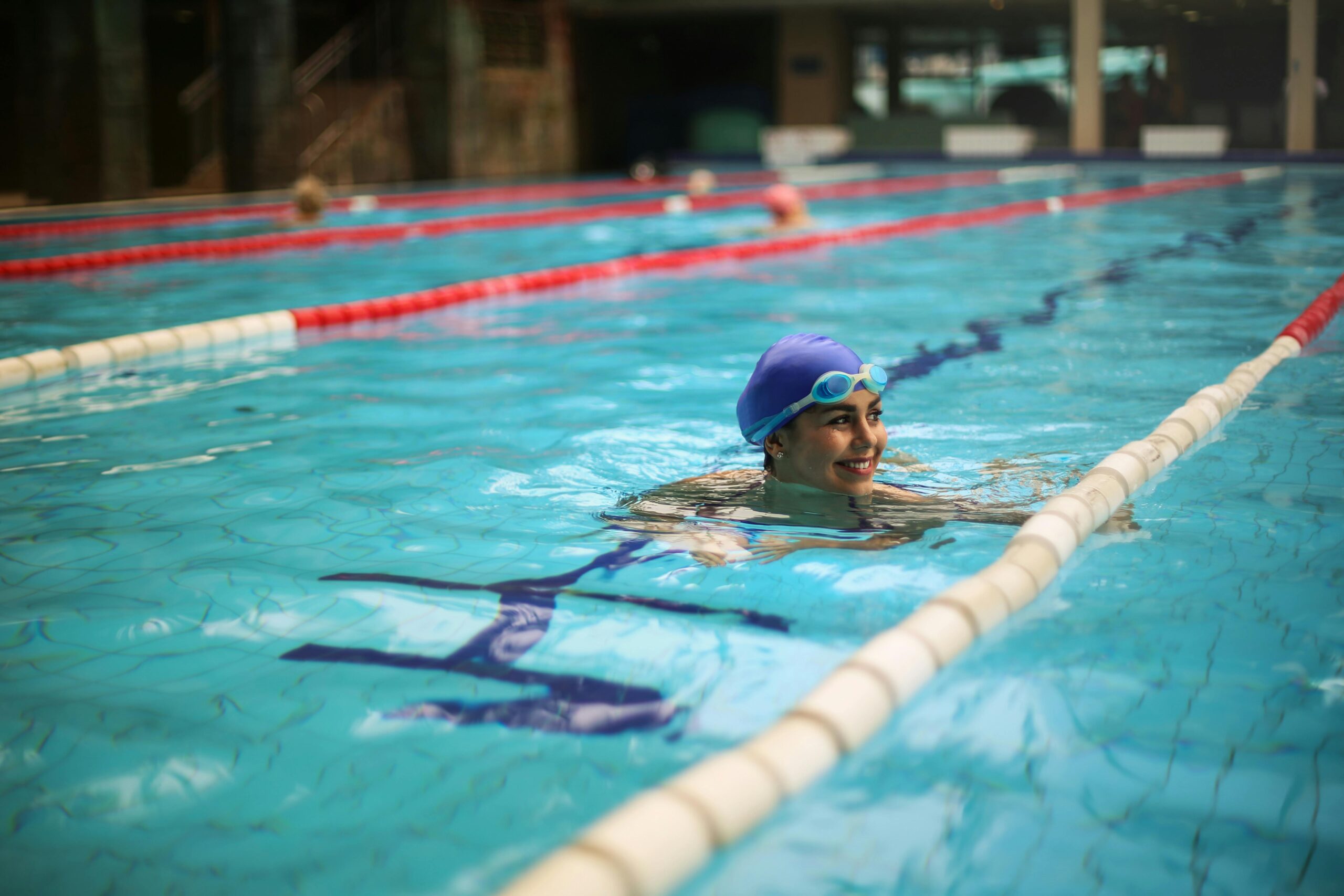
How Deep Are Indoor Swimming Pools? Simple Explanation

It is because the indoor swimming pools are built to serve a very diverse range of clients or swimmers, from two toddlers who are learning to stand on their own to athletes in training. As a consequence, it is impossible to talk about a single depth that would apply to all the indoor pools. Put simply, the depths of the majority of indoor swimming pools vary between 3 feet (0.9 m) on the shallow end to 6-8 feet (1.8-2.4 m) on the deep end, which is determined by the way the pool is built and utilised.
Certain pools are flat and remain at the same depth between walls, whereas others are graded downward to shallow. The depth of the fitness and lap pools tends to remain the same, whereas family and recreational pools have shallow play pools and deeper swimming pools.
Mean Depth of Indoor Swimming Pools
The average depth of an indoor pool is usually 4 or 5 feet (1.2-1.5 m) when taking into consideration the hundreds of these pools in schools, gymnastics centres, hotels, and aquatics centres. It is deep enough to swim and go round laps, but at the same time shallow enough that most adults can comfortably stand in it in case they really need to. Most contemporary indoor swimming pools do not have very deep parts since diving is less popular now, and the standards of safety are inclined towards controlled and predictable water levels.
What People Mean When They Ask, “How Deep Are Indoor Swimming Pools?”
The majority of the individuals posing this question are not seeking a single figure. They are actually questioning the safety, usability, and suitability of an indoor pool for their needs. A parent would be interested in whether his or her child will be able to stand. A swimmer will want to know whether he/she will be able to complete some laps without any difficulties. The owner of a facility would like to know the depth that would be safe and in building standards. There is actually no meaning to the question, as the measurement is not the issue, but usability, safety, and purpose are.
Why Indoor Swimming Pool Depth Matters
The depth influences practically everything in a pool. It dictates the safety of children to play, the safety of adults to exercise without touching the ground, and the ability to dive or jump. It also influences the cost of heating, safety standards, and even the level of the pool room in regard to its loudness and echoing. A shallow pool is restrictive to swimming. An excessively deep pool risks and leads to high operating costs. The correct depth produces a balance between comfort, safety, and functionality.
Who This Guide Is For (Families, Swimmers, Facility Owners)
This guide is for any individual who uses, manages, or plans an indoor pool. The families should be aware of safe swimming zones for children. Fitness swimmers should be informed whether a pool is conducive to proper stroke and lap training or not. Builders and owners of the facilities require a clear standard of depth to construct the pools according to the code and expectations of the users. Regardless of your position, deep knowledge can be used to make better and safer use of the pool.
Standard Indoor Swimming Pool Depths
Most indoor pools have widely accepted ranges of depth. They are founded on building codes, safety studies, and hundreds of years of pool design experience. The numbers might vary according to the type and country where the pool is, but the general trends are similar worldwide.

Indoor Swimming Pools and Shallow End Depth
Indoor pools with superficial ends have their depth at 3 to 3.5 feet (90-105 cm). This level would enable children and beginners to be safely standing and, at the same time, be able to float and move within the water. It is also perfect for entry steps, pool ladders, and leisure.
Deep End Depth in Indoor Swimming Pools
Most deep-end pools that are indoor have a depth of between 5.5 and 8 feet (1.7-2.4 m). The pools in the older days can be deeper, particularly where the pools were fitted with the diving boards, but the contemporary indoor pools tend to limit the deep water to minimise cases of accidents and to minimise the amount of insurance premiums.
Lap Pool Depth vs Recreational Pool Depth
Swimming is necessary in lap pools, not standing. They are generally even in depth, 4 to 5 feet through the whole length. Recreational pools, on the other hand, are sloped downward on the shallow play areas and are further deepened to allow various age groups and activities to be carried out in them.
Therapy & Training Pool Depths
Three- to four-foot therapy and rehabilitation pools are commonly used and provide the patient with the opportunity to walk, stretch, and exercise with less body weight. Swimming lesson training pools can be of the same type, and therefore, teachers can stand while instructing learners.
How deep are indoor swimming pools
The pools of professional competition are at least 6.5 to 7 feet (2.1-2.1 m) in depth. The deeper water decreases the turbulence of the waves, and as such, the swimmers get to swim through the water faster and with ease.
How Indoor Swimming Pool Depth Affects Safety & Use
The degree is a direct determinant of the safety and utility of a pool to various individuals.
Are Indoor Swimming Pools Deep Enough for Adults?
Yes. The majority of indoor pools are constructed in such a way that an adult will be able to swim without clinging to the floor and, at the same time, stand on the floor in case of necessity. The optimum balance is between 4 and 5 feet.
Is it safe to have indoor swimming pools with kids?
They are secure in case of low depths. The areas to be used by children must be a depth of about 3 feet and supervised at all times. A lot of indoor pools have made entries to enable the children to move into deeper waters gradually.
Are You Good at Diving in an Indoor Swimming Pool?
Diving is not allowed in most modern-day indoor pools unless there is a special deep pool of at least 8 to 10 feet. Due to the risk of injury, most facilities do away with diving boards completely.
How Pool Depth Affects Exercise & Lap Swimming
The depth influences resistance and comfort. Swimmers can also use a 45-foot pool without contact with the floor, which means that it is ideal for exercise and training in terms of strength.
Indoor Swimming Pool Depth vs Other Pool Types
The interior pools are not similar to the exterior and speciality pools.
Indoor vs Outdoor Swimming Pool Depth
Deep-diving areas can be found in outdoor pools. Indoor pools tend to be smaller and have more control to minimise accidents and maintenance.
Hotel vs Public Indoor Pool Depths
Hotel pools are typically 3 to 5 feet deep and for casual use. The pools that are accessible to the public can also have deeper areas used in swimming programmes and training.
Home Indoor Pools vs Commercial Pools
Home indoor pools are commonly 3.5 to 5 feet long in order to be family-friendly, whereas commercial pools can extend up to 6 to 8 feet in order to be more generally usable.
Choosing the Right Depth for an Indoor Swimming Pool
The decision to use depth is based on the intended use of the pool.
Best Depth for Home Indoor Swimming Pools
A depth of 3.5 to 5 feet is good in case of families and recreational swimming.
Best Depth for Fitness & Lap Swimming
A depth of between 4 and 5 feet is the most appropriate balance between safety and performance.
Best Depth for Families & Children
Areas of 3 feet with slopes that are gradual to deeper water provide flexibility and safety.
How Pool Builders Decide Indoor Pool Depth
Builders take into consideration security codes, target users, building structure, and the cost of maintenance. The depth selection is pegged on the necessity to weigh out the functions, safety, and efficiency.
FAQs
What is the minimum depth of an indoor swimming pool?
The pools of the indoor pools start with 3 feet of shallow pools.
How deep is a standard indoor lap pool?
Typically 4 to 5 feet in length.
Do indoor pools have deep diving areas?
The majority of modern indoor swimming pools do not. The older ones can be 810 feet deep.
Is 4 feet deep enough to swim?
Yes. Ideal dimensions are four feet for swimming, fitness, and general use of the pool.
Conclusion
The swimming pools that are found indoors are engineered to be purposeful, safe, and easy to use. The depths differ, but the majority are between 3 and 8 feet, with 4 to 5 feet being the most widespread. It is possible to understand the depth of an indoor pool, and then you can determine whether it is suitable for children, exercise, therapy, or serious training. When the depth is determined correctly, being indoors, an indoor pool is more than just a swimming pool; it is a place of safety and comfort for all who enter the water.