
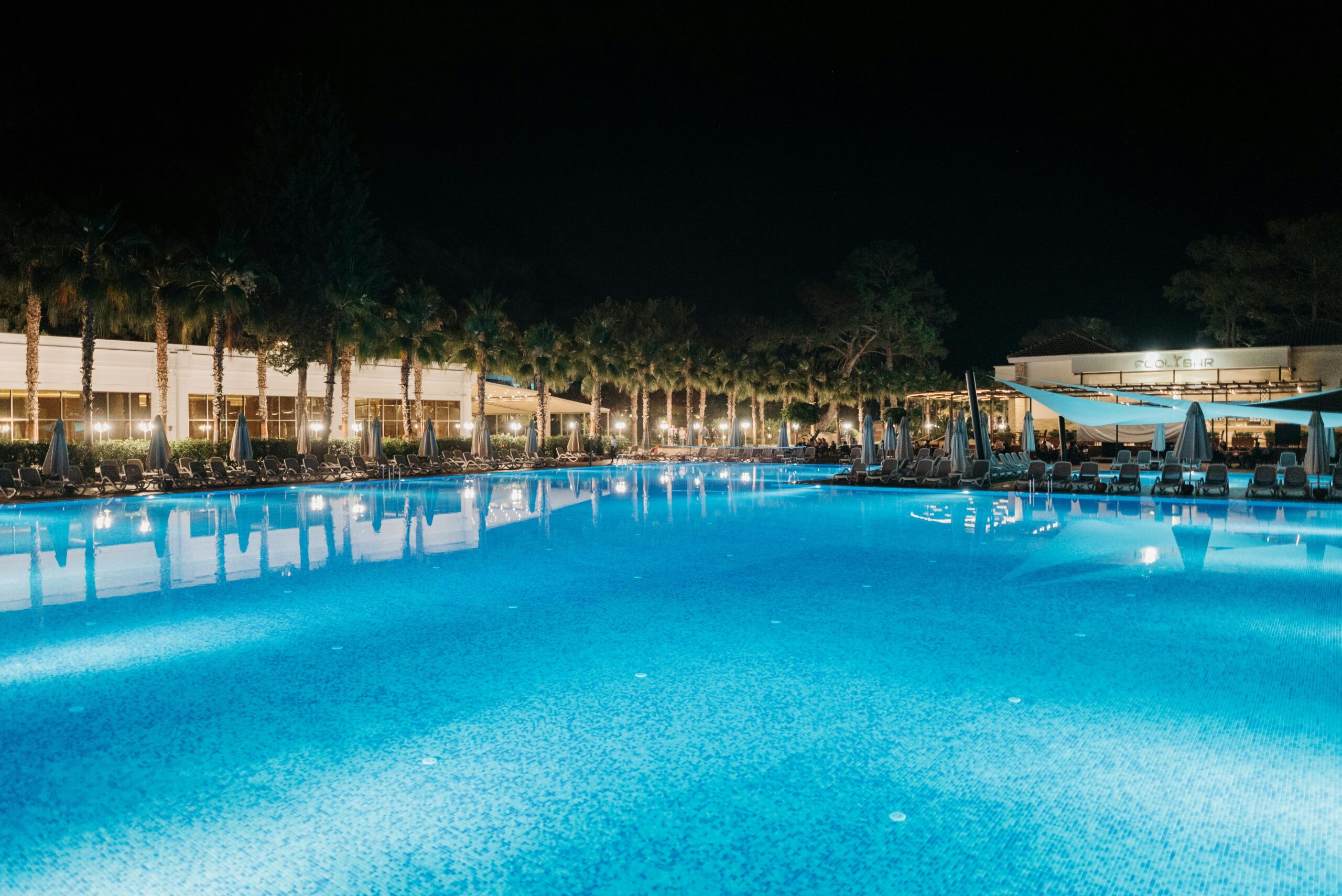
Introduction: Why Keep an Outdoor Pool Warm at Night Matters
Installing the outdoor pool with warm water during the night not only makes the late evening swimming feel good. It safeguards the water chemistry, saves on heating expenses, and aids in maintaining a consistent temperature that is less difficult to manage in the morning. Most pool owners will find that their pool is very warm throughout the day, and then when daylight is over, their pool is losing a lot of heat. This manual outlines the reasons that make that so, the ways to avoid it, and the techniques that really work, no hype, no technical jargon, simply good advice.
Common Nighttime Heat Loss Problems in Outdoor Pools
Outdoor pools lose heat fast at night since the air cools down and the water is subjected to evaporation. It is even cold enough at night to make your pool feel cold in the morning, even when it has been a hot day. Owners often deal with:
- Several degrees of water that it lost at night.
- Long-running heaters consume energy.
- Swimming in the morning is becoming unpleasant.
- Extra expenses incurred in heating the pool on a daily basis.
- Higher moisture of the pool surface.
The majority of these problems are related to the inability of the heat to be efficiently retained, not the heater itself.
Who This Guide Is For (Beginners, DIY Owners, New Pool Owners)
This guide is created to help any person who desires to maintain his or her outdoor pool warm, yet without making a complex issue of it. Whether you’re:
- A new pool owner is familiarizing him/herself with the basics.
- A house owner who prefers to work by himself and also to save some money.
- An individual already has a heater but desires to save on the cost of operation.
- Or just a night-swimming lover sometimes.
This manual provides you with practical, real-life techniques that you can apply at once.
Quick Overview of Solutions Covered in This Guide
In this guide, you’ll learn:
- The physics of heat loss at night.
- The best heating and insulation systems.
- Unexpectedly effective low-cost solutions.
- The way resorts and commercial facilities heat pools.
- Common mistakes to avoid
- The difference between the best method to use in your climate and budget.
You will get to know, by the end, how to effectively and cheaply keep your outdoor pool warm at night.
Understanding How Outdoor Pools Lose Heat at Night
Heat Loss (Evaporation, Radiation, Convection) Science of Pools
3 processes make your pool get colder at night:
- The largest cause of heat loss is through evaporation. The evaporating process of water removes heat energy from the pool. This is aggravated by wind and low humidity.
- Radiation: The hot water is given out to the cooler night air, particularly during clear skies.
- Convection One massage, the warm air over the pool is drawn away by cooler air across the surface, thus this is comparable to the wind and makes one feel cold.
Knowing these makes you realize why the covering or insulation of the pool is also equally important as the heating of the pool.
Why Outdoor Pools Cool Faster at Night Than During the Day
Natural heating is offered by daylight sun rays. Solar energy is absorbed by the pools even in the absence of a heater, and this increases the temperature of the water. By night, however, two things take place:
- The sun sets away, taking with it the source of heat.
- The air temperature experienced decreases the rate of heat loss.
When the nightly temperature drops below the temperature of your pool water by 5-10 o C, the water has become a source of heat to the air-it cools quickly uncovered.
Factors That Influence Nighttime Water Temperature
Several factors influence the speed of your pool cooling:
- Wind exposure
- Water content (air is drier; thus, more evaporation)
- Pool size and depth
- Type of pool cover used
- Existence of neighboring walls or landscape.
- Heater type and efficiency
- Climate and season
Two pools in the same neighborhood may act differently depending on these elements.
Important Ways in which an outdoor pool can be warmed during the night
Installation of Pool Heaters (Gas, Electric, Solar, Heat pumps)
The most immediate and fast solution is pool heaters:
- Gas heaters boil water in just a short period of time, which is best suited for cold areas or in pools that are on demand.
- Electric resistance heaters are also simple to maintain and, in most cases, more expensive to operate.
- The solar heaters involve the use of roof-mounted panels to capture the free sunlight, thereby cutting down the long-term expenses by a significant margin.
- Heat pumps attract heat out of the air, which is highly efficient in moderate weather conditions.
Although the heater increases the heat content of the water, it is most effective when used with insulation in order to ensure heat is not lost at night.
Pool Covers and Blankets for Nighttime Heat Retention
The most effective method of retaining heat is to use a pool cover. Even a simple cover material can prevent evaporation by 80 to 90%.
Types include:
- Solar blankets
- Thermal blankets
- Automatic safety covers
These trap heat and shield the water against night cooling, wind, and debris.
Thermal Rings and Liquid Solar Covers
When you do not need a complete cover on your pool, these are options:
- The water contains thermal rings that help in minimizing heat loss in certain areas.
- Liquid solar covers are convenient but less efficient than traditional covers, and they are an invisible layer that forms on the surface.
They are fantastic accessories for cooler climates or even individuals seeking minimal care.
Insulated Pool Enclosures and Wind Barriers
One of the largest sources of nighttime heat loss is wind. Adding:
- Enclosures made of glass or polycarbonate.
- Partial covers
- Tall shrubs, fences, or walls
beaming of a microclimate in the area surrounding the pool causes the air to be warmer and lose heat at an extremely low rate.
Smart Automation for Nighttime Heating Cycles
The automation systems of the pools can be programmed to memorize the activities of your pool and to regulate the operation time in the most efficient manner of the heater.
They assist in having a constant temperature without the use of electricity or gas.
Many systems can:
- Turn on heating only when necessary.
- Weather synchronisation.
- Track energy usage
- Integrate with solar heating systems.
How to heat an outdoor pool at night in a cost-effective way
Low-Budget Do-It-Yourself Heat Retention Techniques
When you are low-end:
- With a bubble-shaped solar cover.
- Planting wind breaks in the form of tall plants or privacy screens.
- Placing black-painted solar mats to gain heat.
- During hot days, the pump should be operated.
The remedies are affordable and at the same time give real outcomes.
Eliminating Drafts without Exorbitant Machines
But little may well do much:
- Cover the pool even at night, especially during summer.
- Reduce water features where unnecessary evaporation takes place.
- Minimize nighttime temperature by 1-2 degrees to save on energy.
- Heating in short bursts should be employed as opposed to protracted cycles.
Optimizing Your Pool’s Daily Heating Schedule
It is a waste of money heating in incorrect periods.
For best results:
- Heat the pool during the night or towards the end of the day.
- Do not warm cold; maintain a constant temperature.
- Take advantage of daytime sunlight and allow your heater to sail.
This will save on the heat you require during the night.
Applications and Use Cases
Best Practices of Residential Outdoor Pools
A combination of: is used by most of the homeowners.
- A solar blanket
- A heat pump or gas heater
- Wind-protecting landscaping
This ratio makes sure that the costs are maintained and warm water is delivered.
How Hotels and Resorts Warm up their Pools at night
Commercial facilities use:
- High-efficiency heat pumps
- Full pool covers after hours
- Enclosures that trap heat
- Night adjustable automated systems.
They operate on the strategy of efficiency and consistency
Commercial Pool Facility Energy-Saving Ideas
Major facilities often:
- Combine solar and heat pumps.
- Conduct heating cycles at off-peak energy periods.
- Depend on heavy thermal blankets.
- Carry out airflow and wind tests to position barriers in strategic locations.
These plans could be reduced to residential levels.
Comparison of the available night heating
Efficiency (Gas vs. Solar vs. Heat Pumps)
- Gas heaters: quickest heating, most costly to use.
- Solar: least fast to warm, minimal operation expense.
- Heat pumps: the most efficient and performant.
They both have advantages in terms of weather, budget, and pool size.
Upfront Cost vs. Long-Term Energy Savings
Higher initial cost of solar systems and heat pumps, but they will save much in the long run. A heat gas heater is less expensive, but pricier to use.
Which Method Is Best for Different Climates?
- Low temperatures: gas or hybrid.
- Middle temperatures: heat pumps.
- Sunny regions: solar heaters
Ideally, you should align the system to your climate.
Errors to avoid when trying to heat an outdoor pool at night
Depending on Heating Only and No Insulation
Warming up without trapping the heat is like warming up a house and leaving the windows open.
Always use a cover.
Incorrect Use of Pool Covers
Many owners:
- Don’t cover the pool fully
- Take leave after evening swims.
- Select covers that are too thin to keep the heat.
Its best cover will not be effective when it is not used properly.
Common Setup Errors That Waste Energy
Avoid:
- Trying to run the heaters at the lowest moment.
- It is to keep waterfalls or fountains running.
- Adjusting the thermostat to levels exceeding those required.
- Using undersized heaters
Minuscule fixes can reduce the heating expenses by a significant margin.
FAQs
Why does my pool dissipate that much heat in the night?
Due to evaporation, wind, and the temperature of the nighttime air, heat is taken out of the water.
What is the cheapest way to keep an outdoor pool warm at night?
Solar blanket or liquid solar cover- both of them reduce heat loss drastically.
Do solar blankets really work overnight?
Yes. They are heat traps, do not allow evaporation, and can retain a few degrees of warmth.
How warm should an outdoor pool be for comfortable night swimming?
Most swimmers prefer 78–82°F (25–28°C). Ideal temperatures to use in night swimming include 8285°FF (28-29.5 °C).
Conclusion
Summary of Heating Methods
- Heaters increase the temperature of water.
- Couches and blankets retain the heat.
- There are wind barriers that prevent nighttime cooling.
- Automation will provide effective heating conditions.
Recommended Setup for Most Pool Owners
An effective and economical setup:
- A solar blanket
- A heat pump (or gas heater in lower temperatures)
- An obstruction of wind, such as fencing or tall plantations.
The mix provides very good heat retention at night.
Follow-UP (Checklists, Maintenance, Upgrades)
- Garner your pool cover to ensure that it is not torn or has no holes.
- Measuring your heater efficiency.
- Add automation when you operate your pool all year round.
- Investigate solar heating as a long-term savings.
In the right manner, it becomes easy, cheap, and convenient to heat your outdoor pool at night.