
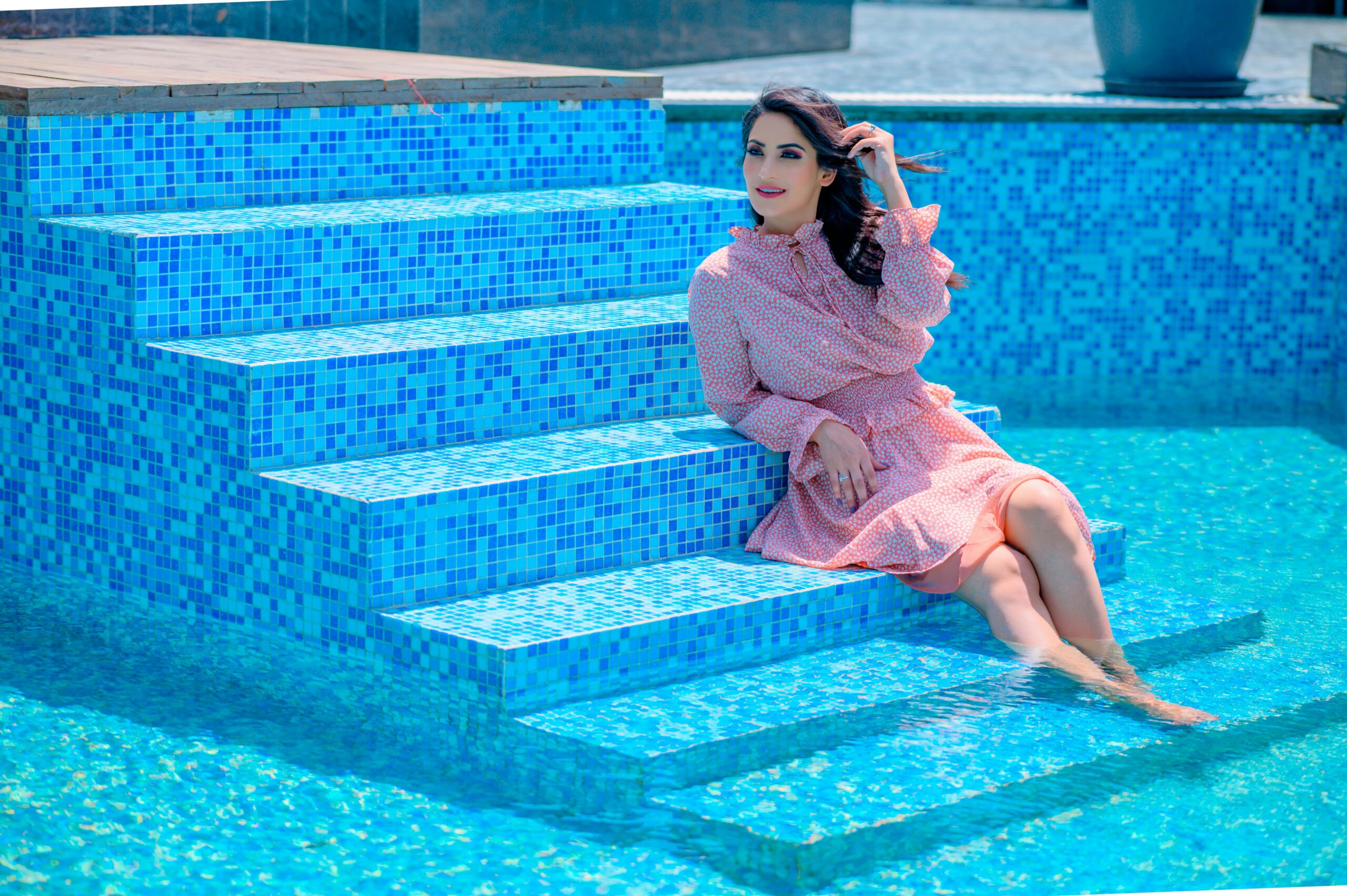
What Is a Tiled Pool?
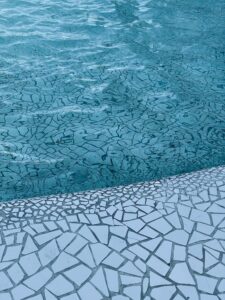
A tiled pool is a swimming pool that has been completed with individual tiles; most of them are made of ceramic, porcelain, glass, or mosaic placed on the inside of the pool. Single-layer finishes are due to be replaced by tiled pools that are built by attaching tiles to an established concrete shell, which is then covered with special grouting and waterproofing. This technique would produce a surface that is not only aesthetically pleasing but also very tough.
The quality of a tiled pool is actually accuracy. Each tile will add to the overall appearance, touch, and functionality of the pool. It provides unparalleled control of color, texture, pattern, and detailing, whether one wants the sleek modern appearance or a complex artistic pattern.
How it differs from other pool finishes
A tiled pool is not comparable to plaster, pebble, vinyl, or fiber materials, which are used as finishes. Traditional finishes are done in a continuous layer, and this may wear off, discolor, or crack in due course. On the contrary, tile is a modular finish. In the event of damage, they can be replaced or repaired, and the whole pool is not resurfaced.
Tiled pools are also much more resistant to chemical erosion than to finishes based on plaster. They do not fade or change their texture or structure with repeated exposure to chemicals and remain a long-term solution, as opposed to a short-term coating.
Why Choose a Tiled Pool?
The decision to make a tile pool is seldom about the cost savings, but rather about the quality, durability, and freedom of design.
Durability
Durability is one of the greatest reasons why homeowners and commercial developers choose a tiled pool. The quality of pool tiles is that they are fired in high temperatures, and therefore, they do not crack or fade and are immune to chemical damage. With proper installation, a tiled pool may serve a span of decades without the need to have a complete resurfacing.
Tile, in contrast with plaster, does not begin to dissipate and scar as time passes. This particularly suits pools that are heavily used or those that run throughout the year.
Aesthetics
Wet, wet, deep ocean blues, custom gradient and art mosaics, a tile pool is an artistic option that other finishes just cannot compete with. Tile reflects light in a different way, providing the water with a deeper, more vibrant look. Especially, glass tiles give the impression of a shimmering effect, giving the pool a higher status between functional and architectural.
Such customization enables the pool to be integrated with neighboring landscapes, contemporary houses, resorts, or luxury developments in an integrated manner.
Long-term value
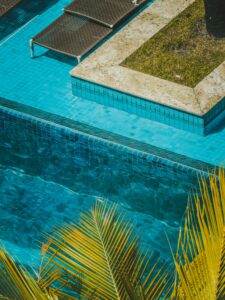
Though the installation of a tiled pool may be expensive in terms of initial expenditure, its long-term value usually compensates for the initial expenses. Tiled pools are cheaper in the long run with the reduced resurfacing requirements, less fading, and less difficult localized repairs. This also translates to an increase in the resale value and perceived quality on the part of property owners.
Types of Tiled Pool Finishes
All tiled pools are not equal. The appearance, performance, and cost are greatly influenced by the type of tile that is used.
Ceramic-Tiled Pool
A more traditional and cost-effective choice of tiled pools is ceramic tiles. They are very durable, and they come in a variety of colors, but are slightly porous compared to other materials. Ceramic tiles can be used as a decorative border and as waterlines, as well as in low-impact residential pools.
Porcelain-Tiled Pool
Porcelain tiles are denser, less porous, and more durable than ceramic tiles. This makes them a favorite in full pool coverage. They withstand changes in temperature, chemical exposure, and high usage, and hence are suitable for residential and commercial tiled pools.
Glass-Tiled Pool
A glass-tiled pool is the high-end of the pool finish. Glass tiles are water-resistant and very resilient to chemicals and staining, as well as being very reflective. They give watercolor its depth and brilliance, which is impossible to achieve using other materials. Glass tiles may also be used in luxury homes, resorts, and statement pools, though this is more costly.
Mosaic Tiled Pool Designs
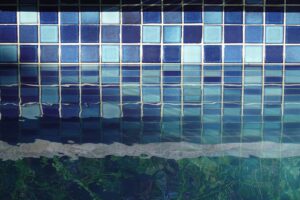
Mosaic tiles are both art and utilitarian. They can be customized to the desired pattern, logo, gradients, and images, which makes them popular in feature walls, pool floors, and high-end design. The design of the mosaic tile pools has been employed to make a distinct identity of a space as opposed to a simple swimming pool.
Tiled Pool Design & Customization
Tiled pools shine where design is concerned. All decisions, such as color to tile size, have an effect on the looks as well as the functionality.
Color and Pattern Selection
The color of the tiles defines the appearance of the water when the light changes. The lightest shades make the location look very clear and resort-like, whereas darker colors are dramatic and deep. The patterns can be plain in case of a clean look or different to provide motion and texture.
Gradients or mixed tones are also a common aspect that designers resort to to make the quality look non-two-dimensional and increase the visual appeal.
Slip-Resistant Tile Choices
The style is not more important than safety. Most contemporary tiled pools utilize a textured or matte finish tile in shallow pool sections, steps, and pool edges. These are slip-resistant tiles that minimize accidents at maximum without disturbing the design of the tiles, particularly in family or community pools.
Luxury vs Minimalist Tiled Pool Designs
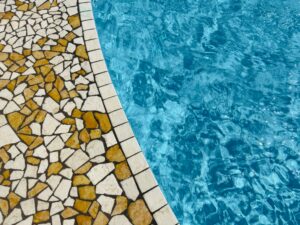
In luxury designs, glass tiles, detailed mosaics, and vivid color transitions are some of the characteristics. Minimalist designs center on the use of uniform sizes of tiles, neutral colors, and straight lines. The two methods have the advantage of accuracy and versatility that is available only with a tiled pool.
How a Tiled Pool Is Installed
The performance of a tiled pool requires proper installation. It is not a process that is conducive to shortcuts.
Surface Preparation
The concrete shell should be structurally diverse, smooth, and adequately cured. Any defects are able to influence the adhesion and durability of tiles. In some cases, waterproof membranes are used at this point to avoid the entry of moisture.
Tile Laying and Grouting
Specialized adhesives that are intended to be used in submerged areas are used to install the tiles. The spacing is done with efforts to maintain uniform grout lines. There is the use of high-quality grout, which is frequently epoxy-based to resist chemicals and staining.
Waterproofing and Sealing
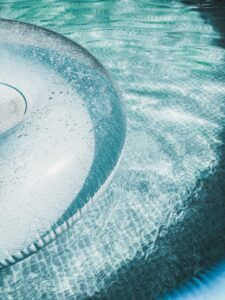
Final sealing provides defense against grout lines and waterproofing. This will be important in avoiding leaks and prolonging the lifespan of the tiled pool.
Tiled Pool Maintenance Guide
Tiled pools are easy to maintain, unlike other finishes, and at the same time, with proper care, they remain clean.
Cleaning a Tiled Pool
Frequently brushing the teeth helps to eliminate the accumulation of minerals so that the algae cannot settle in grout lines. Cleaners that are mild and do not harm surfaces help to keep the surfaces shiny.
Preventing Algae and Stains
The balanced water chemistry is important. Correct pH and chlorine concentrations inhibit the growth and staining of algae in grout, particularly.
Replacing or Repairing Pool Tiles
One of the advantages of a tiled pool is targeted repair. In the case of individual damaged tiles located, they can be replaced without emptying out the pool or repaving the pool.
Real-World Applications
Residential Tiled Pools
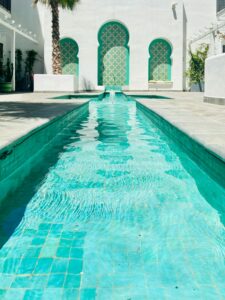
Tiled pools are preferred by homeowners due to their long life duration, personalization, and luxury status, particularly in the case of custom-built houses.
Commercial and Hotel Tiled Pools
Hotels and resorts use tiled pools because of their durability, hygiene, and beauty when working under massive daily demand.
Public and Competition Pools
The tiled finishes of pools are advantageous in terms of slip resistance, ease of maintenance, and the prolonged lifespan of the pools themselves.
Tiled Pool Cost Breakdown
Material Costs
Prices are different according to tile type. On the low side, there are ceramics, and on the high end, there are glass tiles.
Installation Costs
Manufacturing that is labor-intensive makes it more expensive at the start, yet guarantees performance and durability.
Long-Term Maintenance Costs
Flexible repair and lower frequency of resurfacing usually end up saving lifetime costs as opposed to other finishes.
Tiled Pool Pros and Cons
Pros
-
Exceptional durability
-
Expert design flexibility.
-
Stain resistance and chemical resistance.
Cons
- Higher initial cost
- Needs qualified installation.
Tiled Pool vs Other Pool Finishes
- Pebble: Cheaper, less polished, and customizable.
- Vinyl: cheap, less life.
- Fiberglass: Easy to install, few designs.
FAQs
How long does a tiled pool last?
With the right installation and maintenance, a tiled pool can last 30-50 years or longer.
Are tiled pools slippery?
Slip resistance is dependent on tile selection. Contemporary textured tiles have a great deal of reduction in slip.
Is a tiled pool worth the cost?
Yes, if it needs to be owned long-term, durable, and attractive, particularly in high-use or high-end pools.
Conclusion
A tiled pool is not a temporary swimming surface, but it is a lifelong investment in durability, design, and value. When you are more concerned with the aesthetics, durability, and even personalization rather than saving money in the short run, a tiled pool is the only option you have. Tiled pools are still the ultimate choice to have a high-quality aquatic design, whether in a personal house, high-end hotel, or any government building.