

Introduction: Test Indoor Pool Water Step-by-Step Guide
Why Testing Indoor Pool Water Matters
Having a clean, well-maintained indoor pool is not merely about aesthetics but also about health, safety, and comfort. Indoor pools are located in a confined setting (as compared to outdoor pools) where limited ventilation, reduced sunlight, and high humidity may cause severe alterations to the water chemistry. This situation elevates the frequency of testing to the limelight since chemical imbalances can lead to either the formation of clear water, irritation of the swimmers, corrosion of the equipment, or even the growth of microbes.
In the case of your indoor pools, you need to check the concentration of chlorine, pH, alkalinity, and other key parameters and ensure that they fall within the territory of safe and effective values. This guide will contain all the details that you are expected to know: water basic parameters, measurements, the way to perform the measurements, the results analysis, the way to solve the common issues, and the advanced monitoring systems. By the conclusion, you would be in a state to make sure that the indoor pool has safe, clean, and comfortable swimming conditions.
Understanding the Basics of Indoor Pool Water Testing
What Does the Testing of Water in Indoor Pools Involve?
Testing of the water in indoor pools entails checking the parameters of chemical balance, clarity of the water, and its safety. This process makes sure that the levels of chlorine or bromine are not excessive to clean the water and, at the same time, does not use excessive chlorine that might be too harsh on the skin and eyes. It also checks pH, alkalinity, and calcium, which influence the stability of water, corrosion, and comfort to swimmers.
In essence, testing converts raw measurements, like cloudy water or a high concentration of chlorine fume, into a numerical form, which can be used to control maintenance and chemical alterations.
Key Parameters You Need to Measure
To test the indoor pool water properly, you should pay attention to the following basic parameters:
- pH: Means acidity/alkalinity of water. Ideal range: 7.2–7.8.
- Chlorine/Bromine: Disinfects the water. Chlorine ideal range: 1–3 ppm.
- Alkalinity: this makes sure that pH is stabilised in water by buffering it. Optimal: 80–120 ppm.
- Calcium Hardness: inhibits the development of corrosion or scaling. Optimal: 200–400 ppm.
- Total Dissolved Solids (TDS): Indicates mineral/impurities. The TDS can be elevated, reducing the clarity and chemical activity of water.
Surveillance of these aspects guarantees a sound swimming environment and the safeguarding of the internal pool facilities.
How Indoor Conditions Affect Water Chemistry
Low ventilation, absence of UV, and increased humidity differentiate the indoor pools from the outdoor pools. Chlorine does not naturally degrade in the absence of sunlight, and this may result in the accumulation of chemicals. Inadequate air movement results in the accumulation of chloramine, giving off a pungent odour and irritation of the eyes. Moisture has the ability to speed up metal fixing corrosion and influence chemical rates.
Learning about such differences can make you change the frequency of testing and dosing of chemicals in an indoor environment, in particular.
Tools and Kits for Testing Indoor Pool Water
Types of Pool Testing Kits
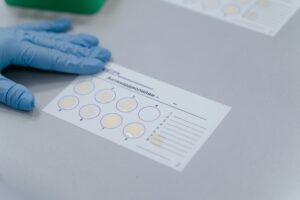
Testing tools are of three major types:
- Test Strips: Fast and convenient, best suited for the most frequent spot checks. The accuracy may depend on the humidity and storage conditions.
- Liquid Reagent Kits: Precise compared to strips, these are colour comparisons used to measure chemicals such as chlorine, bromine, and pH.
- Digital Meters: These are digital meters that give the exact numerical value of pH, chlorine, and TDS, and are ideal in commercial pools or high-use facilities.
Both tools have their benefits according to what you are doing and what type of pool you are using.
Recommended Water Testing Brands or Devices
Reliable brands include:
- Taylor Technologies: Taylor Technologies are famous because of their test kit accuracy.
- LaMotte sells liquid kits and digital meters to be used by professionals.
- PoolLab: Pool meters with high-tech digital displays that provide rapid, repeatable readings.
A popular, checked brand is the one that is selected: it is accurate and has a long life cycle.
Step-by-Step Guide: How to Test Indoor Pool Water Correctly
Step 1: Collect a Proper Water Sample
Collect the sample in the middle and eliminate pool edges or skimmers. Prohibit superficial debris to get good results. Containers used should be clean and neutral in nature and should be used with an upstream fill in case of a current in the pool to avoid contamination.
Step 2: Use Your Testing Kit or Device
Use your selected tool of testing:
- Test strips: Compare colour changes instantly.
- Liquid kits: Add the reagents to the water sample and compare colour indicators.
- Digital meters: Calibrate and place probes in the mid-depth to achieve optimal results.
Measurement of pH of checks, chlorine/bromine, alkalinity, calcium hardness, and TDS in this step.
Step 3: Record and Interpret Results
The result of the log is a maintenance journal of a pool. Compare the readings with the acceptable ranges and see whether there is a need to adjust the chemicals. When swimmers and equipment are protected by proper interpretation, they will not be over- or under-dosed.
Understanding Your Results: What the Numbers Mean
- 2-7.8: pH prevents skin/eye irritation and preserves chemical activity.
- Ppt Cl-3 – Bromine 3-5 ppt: sterilises the pool.
- Alkalinity 80-120 ppm: levels off pH variations.
- Hardness of calcium 200-400 ppm: coats the surfaces and metal fixtures of the pools.
- TDS less than 1500 ppm: This is to maintain the water colour and chemical activity.
The imbalance may cause murkiness in water, rust, and skin reactions, or also indoor air pollution.
How Often Should You Test Indoor Pool Water?
- Residential pools: At least 3 times per week, more frequently when it is used significantly.
- Commercial pools: It is best to test on a daily basis because of the increased traffic and chemical loads.
Seasonal changes or temperature changes are one example where additional testing might be necessary, especially in enclosed indoor conditions.
Troubleshooting Common Water Testing Problems
Inaccurate Readings or Cloudy Water
Examples are out-of-date test strips, improper sampling, chemical interference, and problems with equipment calibration. It is important to keep the kits in place and follow directions.
How to Correct Imbalances Safely
- High chlorine: natural dissipation or drain down the pool partially.
- Low chlorine: dose or shock gradually.
- pH imbalance: In either case, add pH increaser (soda ash) or pH decreaser (muriatic acid).
Advanced Testing and Monitoring Solutions
Contemporary pools have the advantage of automated sensors and intelligent monitors. Devices monitor pH, chlorine, and temperature in real time with alerts that minimise human error. In high-precision readings, particularly in commercial or hotel facilities, professional laboratory testing may be done at regular intervals.
Real-World Applications and Case Examples
- The residential pools: Homeowners who have digital meters to check weekly ensure that the water remains crystal clear, with the least amount of chemical waste.
- Commercial gyms: The employees are dependent on automated systems that have 24/7 checks that would keep them in line with their local safety regulations.
- Hotels/spas: Have a combination of manual testing and automated sensors to create the right balance between the luxury experience and chemical safety.
Safety and Maintenance Tips for Indoor Pool Water Testing
The Indoor Pool Water Testing, Safety, and Maintenance of Indoor Pools.
- Chemicals should always be kept in a safe place that is well-ventilated.
- Properly ventilate the inside pool to avoid chloramine build-up.
- Store test kits and meters in clean and calibrated condition.
Test the water, as well as periodically maintain the filters and the HVAC system.
Conclusion: Mastering Indoor Pool Water Testing for Clean, Safe Swimming
Permanent testing of water in an indoor pool is a necessary measure towards safe, comfortable, and long-term swimming conditions. It is possible to have balanced water through the knowledge of the main parameters, using appropriate tools, and the frequency of tests, which ensures the safety of swimmers and surfaces and helps keep the indoor air healthy. The consistency and close attention are central, and further testing or compliance with the professionals would guarantee a serene future.

FAQs
How to Test Indoor How can the water in indoor pools be tested easily?
Liquid kits or digital meters are more precise, whereas the quick ones are checked with test strips.
Could we accommodate the same kit on the outdoor pools and indoor pools?
Yes, but indoor pools could be more regularly checked due to humidity and poor ventilation.
Why do the results keep varying?
Sometimes this may happen because of the swimmer loading, chemical dosing, temperature, and even ventilation problems.
What is the frequency of indoor pool water testing?
Residential pools should have at least 3 times a week, and commercial pools should have daily balance and safety maintenance.