
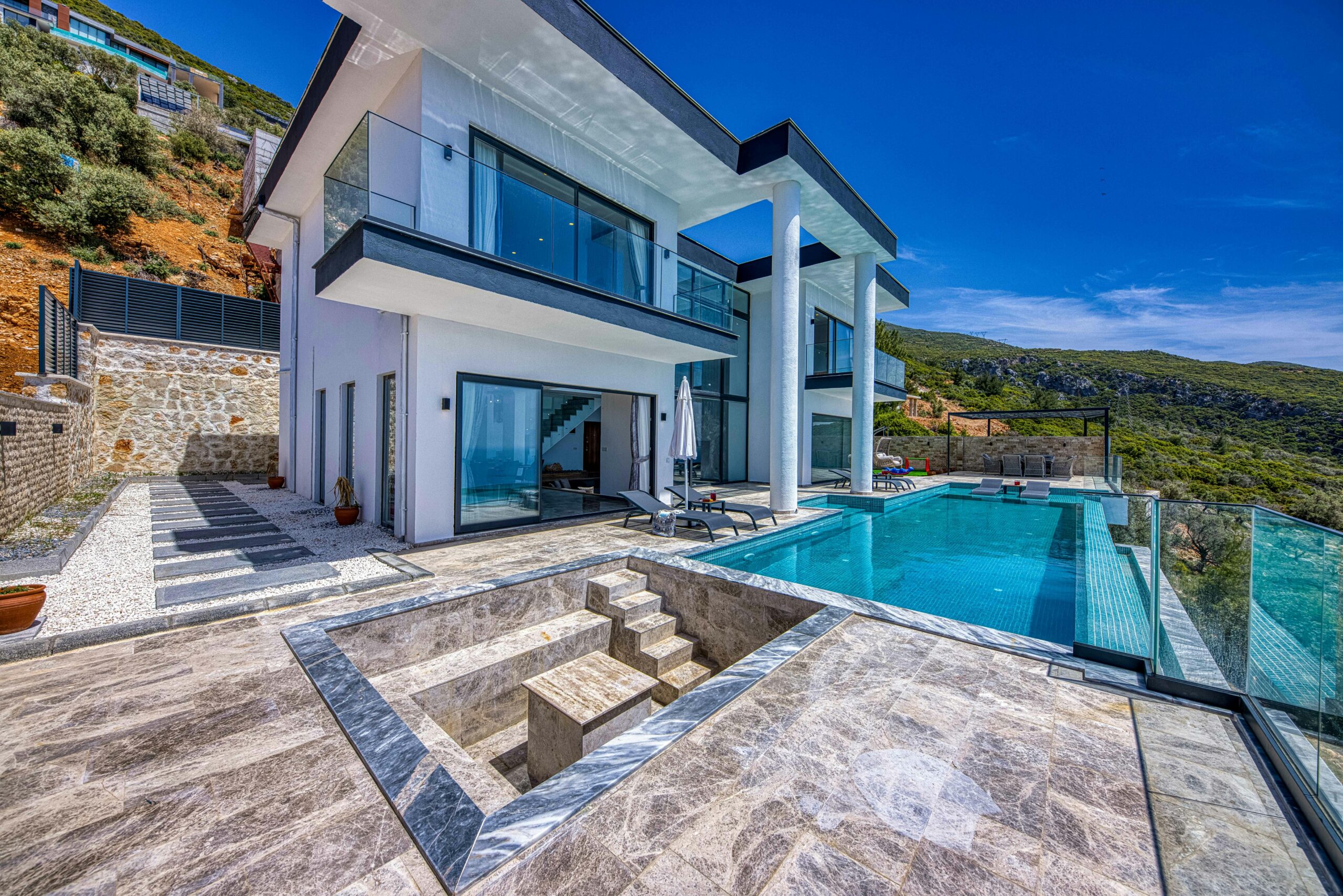
Do Outdoor Pools Add Home Value? Simple Explanation
When people inquire about whether outdoor pools increase the value of homes, the question is actually two-fold. The other is emotional. Will this make my house more pleasant, opulent, and attractive? The other one is the financial one: Will I actually get more money back when I sell? These two concepts are not identical, but they are closely interrelated, and it is the difference that leads to making a smart choice.
From the side of a buyer, a pool may seem like a dream aspect, summer fun, family time, relaxation, and status. As a seller, however, a pool is an investment that will have to pay back in terms of resale value. A pool can certainly add to the amount that buyers will be ready to pay, yet only in the proper market, with the proper kind of pool, and in the proper state.

The influence of outdoor pools on property value is that they alter the home and its use by the people. An attractive pool enhances the lifestyle value, making a backyard a personal resort. It also creates a buyer perception that a pool usually makes a house feel more high-class and entertaining. But no less important are neighborhood norms. When the majority of houses in an area have a pool, it can be considered that a home cannot be complete without one. Otherwise, when the majority of homes do not have one, a pool can be perceived as something superfluous or even a burden.
The guide is targeted at home buyers who may be considering pool construction, home sellers who need to know how to price their property, real estate investors who need to know their ROI, and builders who want to know what adds value in the market, not necessarily the cost of construction.
How Outdoor Pools Impact Home Value
Outdoor pools determine value based on the way the houses are valued, the level of emotions the buyers experience, and the extent to which the home stands out relative to those in the neighborhood.
Appraisers do not just append a dollar amount to a pool. They are dependent on similar sales, which are called “comps”: similar homes that have been sold with and without pools. They also use the market information to find out what buyers in that region are paying. The pool will have a quantifiable value, in case the houses with pools always sell for higher prices than comparable houses without pools do. When they fail to do so, the pool can bring minimal or nothing on paper.
The value is, in fact, determined by the difference between pool and no-pool sales. In other neighborhoods, pool homes are priced tens of thousands higher. In others, the difference in the price is minimal or even negative.

On the part of the buyer, pools are seen differently in a great way based on lifestyle. A huge advantage of having a pool is usually viewed by families as an alternative source of amusement and entertainment for the kids. A swimming pool is an amenity that is usually demanded by luxury buyers and will be discounted in other homes without it. Still, maintenance issues are critical, as customers are aware that pools need to be cleaned and the use of chemicals, electricity, insurance, and repairs. When a pool is old, unsafe, or costly to maintain, it can turn excitement into hesitation.
The value addition or subtraction of a pool is highly regulated by neighborhood standards. In upmarket locations, having a pool is common, and houses that do not have it may not compete well. A pool in the middle-income neighborhoods may be nice, but not to the extent of making the home too priced out of the purchase range of buyers. Rules regarding fencing, safety, and the appearance of a home can make a pool a selling point or a burden in an HOA community.
Outdoor Pools and Return on Investment (ROI)
An average outdoor pool will hardly pay out 100 percent of the amount it takes to construct. According to most research and real estate statistics, the average annual growth of property by a pool of between 5 and 0 percent of the price of a home is typical in localities where pools are preferred. In a home of $500,000, this may translate to $25,000 to $50,000 in value addition to the home, but a new pool can cost between $60,000 and $120,000 or more.
Here, break-even analysis would be of significance. Assuming the cost of a pool is 80,000 and an increase in resale value is 40,000, you do not make money on the pool, but you can enjoy the years of usage. This financial payoff is a partial payoff, rather than a complete one.

The other risk is over-improving a property. Installing a luxury pool in a small house in an underpriced neighborhood can also not be a worthwhile decision to increase the price of the home. Homes are sold to buyers depending on their location, and not only on their characteristics.
Nevertheless, pools can have a significant positive impact on resale value in hot climates, such as Florida, Arizona, Texas, and California, as year-round pools can be used. They also do well in the luxury markets where consumers anticipate the amenities of a resort and can afford them.
Which Types of Outdoor Pools Add the Most Home Value?
Not all pools are created equal in the eyes of buyers or appraisers. In-ground pools nearly always increase the value compared to above-ground pools. Above-ground pools are perceived to be temporary or removable, whereas in-ground pools give the sense of permanence and belonging to the house.
Luxury and resort-like pools are most valuable in high-income areas, particularly infinity-edge pools, spas, waterfalls, and outdoor kitchens. These attributes make the backyard more of a lifestyle rather than a swimming pool.
The small pools that are backyard plunge pools, compact pools, and simple ones are gaining popularity in cities and regions with limited space. They are cheaper but can also provide a valuable addition, provided they are designed appropriately and can fit the size of the house.
How Outdoor Pools Affect Home Buyers & Sellers

Homes with pools tend to sell more quickly in markets that are pool-friendly since they stand out in the listing and appeal to the lifestyle buyers. The pictures of a beautiful pool enhance clicks and views.
There are, however, buyers who shun homes with pools. Households that have very young children might be concerned with security. Older consumers can be concerned with maintenance. These customers do not vanish, and the customer base becomes narrower.
The region of demand is also varying. Pools are a good selling point in hot climates. They can only be attractive to a smaller section of buyers in cold climates and might not be of much resale value.
When Outdoor Pools Do NOT Add Home Value
The situation where pools do not add value arises when there is a tendency for maintenance and insurance costs to be too expensive. Increasing utility bills, chemicals, and liability coverage make customers reluctant.
The lack of fencing or an old pool cover can decrease the appeal and cause legal troubles, as well as safety and liability concerns.
Old pools or poorly constructed pools, ones that have cracked plaster, old tiles, awkward designs, etc., can actually decrease the value of a home, as they are viewed by buyers as an expense to remodel.

Should You Add an Outdoor Pool to Increase Home Value?
You need to add a pool because it will be in your neighborhood, climate, and lifestyle, and you need to enjoy it for a few years. You cannot just come up with a plan to sell a house and make a gain.
Checklist for homeowners:
- Are there pools in similar homes in the surrounding area?
- Are the customers in this region able to pay the extra price?
- Does the pool fit the style and price range of the house?
Before construction, questions include:
- Would I stay here long enough to have fun?
- Is it a hot or pool-friendly market?
- Can I maintain it properly?
FAQs
Does a pool increase appraisal value?
Yes, when similar homes with pools are valued higher, the appraisers apply the same to the valuation.
Is a pool a good investment?
It is normally a partial refund in financial terms. The actual payoff is lifestyle value.
Do pools hurt resale in cold climates?
In other cases, since they have fewer buyers, they can still be attractive, as a well-designed pool can be.
Do buyers prefer homes with pools?
In warm or luxury markets, yes. Tastes are divided in other regions.
Conclusion
Therefore, are outdoor pools a value addition to the home? Yes, but only to the extent that they align with the market, neighborhood, and buyer expectations. The idea of any pool is better thought of as a lifestyle investment that is partially payable as opposed to a sure payoff. When it is performed properly, it will render your house more attractive, competitive, and fun, which is precisely what will be valued.