

Introduction to Indoor Pool Humidity Problems
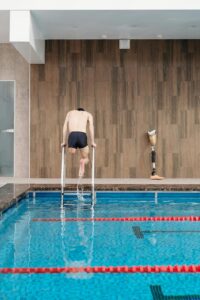
The challenge of the indoor swimming pools is one that an outdoor swimming pool never has to deal with: the battle against moisture that is trapped within a closed structure. Once the humidity exceeds a safe level, the whole environment, air quality, comfort, and the structure itself start to be affected adversely. The excessive humidity in indoor pools is not a negligible inconvenience but the manifestation of the malfunctioning of the indoor environment and the necessity to take immediate measures.
What “Indoor Pool Humidity Too High” Really Means
When we say that an indoor pool is too humid, we are referring to the fact that it is too humid according to the level of moisture that is escaping into the atmosphere through the evaporation process. Ideally, indoor pool rooms (natatoriums) relative humidity must not go over 5060 percent. When the levels soar past that range, the indoor air becomes heavy, sticky, and not easy to control by the HVAC systems. This leads to a cyclic situation of a greater amount of moisture remaining in the air, which puts extra pressure on the equipment and the room itself.
Why Humidity Control Is Essential in Indoor Swimming Pools
Indoor pools are basically vast amounts of warm water that are housed within an enclosed structure, and this in itself would generate a moist atmosphere. Without humidity regulation, this moisture begins to attack all of the uncovered areas of the structure, such as walls, ceilings, windows, insulation, and even the mechanical systems which provide working of the pool. Besides the structural issues, the uncontrolled level of humidity results in poor air quality, the formation of chloramine,ine along with inconvenience to swimmers and workers.
Signs Your Indoor Pool Humidity Is Excessive
The humidity in the indoor pools can show up well before the damage is evident. Some early signs include:
- Foggy or dripping windows
- The vapour in the form of condensed water on walls, ceilings, or metal surfaces.
- The smell of confined chloramines is unchanging (smell of chlorine).
- Swimmers who were sticky or uncomfortable.
- Rust on fittings, screws, or vents.
- Moist or wet locations on drywall, trim, or insulation.
These indicators indicate that the humidity has passed out of the safe range and the room is not balanced anymore.
Understanding the Science Behind Indoor Pool Humidity
To get a feeling as to why indoor pools have a problem with humidity, you must consider the association between water, air, and temperature. The indoor pools constitute a complicated place where physics makes no less significant a contribution than mechanical systems.
How Evaporation Affects Indoor Pool Humidity
The driving force of the humidity of the indoor pool is evaporation. Vapor is given off to the air by warm water naturally, and the warmer or larger the pool, the quicker it evaporates. Swimming, splashing, or hot tub activities boost evaporation by a great extent.
Common Factors That Lead to High Humidity in Indoor Pools
There exist several issues that can introduce humidity to the level, which is not ideal:
- High water temperatures
- Poor room insulation
- Absence of air circulation on the water surface.
- Building envelope leaks
In the event of an overlap of multiple factors, the humidity indoors may rise rapidly.
Why Indoor Pool Humidity Gets Too High

Minor design, installation, and day-to-day operational errors can make indoor pools grapple with humidity. Gaining knowledge of the cause of problems will avoid repetition.
Poor Ventilation and Inadequate Air Exchange
Weak or unbalanced ventilation is one of the largest contributors to high humidity. Without exchanging stale, moist air with drier, fresher air in the system or pushing air over the water surface, humidity will build up. Older pools have a lot of ventilation, which is either old-fashioned or not sized appropriately, and so they are unable to keep up.
Oversized or Undersized Pool Dehumidification Systems
Dehumidification systems should be of the right size.
- Small units are constantly in operation, and yet, they are unable to sustain safe humidity levels.
- Short-cycle units are oversized, which makes the motor uncontrolled and decreases the life of the system.
A system that is not adjusted to the load of evaporation in the pool will never perform well.
Incorrect Water Temperature and Room Temperature Balance
The basic rule regarding the design of natatoriums is that the air temperature must be 2-4°F higher than the pool water.
The pool evaporates at a higher rate when the air is colder. Humidity rises when water is kept in an unnecessarily warm state.
Structural and Building Envelope Issues
Water leaks through the building by use of gaps, cracks, and unsealed places. Absence of vapor barriers in exterior walls and ceilings results in humidity that moves into the structure and causes latent harm that leads to the perception of ineffective HVAC systems.
Dangers of Indoor Pool Humidity Too High
You cannot do away with high humidity. When the moisture comes in, it may cost a lot to undo, and it may be permanent.
Moisture Damage to Building Structure
Wood, drywall, and insulation are wetened, making the materials soft and decreasing the structural integrity. It may, in the long run, cause rot, warping, and untimely collapse of the interior parts.
Metallic Fixtures and HVAC Components Corrosion
The corrosion is increased when chloramines mix with humidity. In constant contact with water, such metal surfaces as vents, HVAC coils, ductwork, screens, and pool equipment corrode significantly faster.
Mold Growth and Air Quality Problems
Molds grow well in moist, warm regions. The mould may develop on the walls, under the flooring, or within the ducting, posing major health hazards and causing serious problems with the remediation.
Discomfort and Health Risks for Swimmers
Chloramines are trapped in the breathing zone due to high humidity, thus causing:
- Eye irritation
- Skin dryness
- Respiratory discomfort
- Fatigue
The bad indoor air quality can become an issue among swimmers and lifeguards.
How to Fix Indoor Pool Humidity That’s Too High

When humidity is already an issue, the combination of airflow enhancement, equipment repairs, and environmental changes will be the most effective solution to the problem.
Improve Ventilation and Air Distribution
The fresh air must flow uniformly and across the surface of the water before it is spent. Enhancement of airflow patterns will be used to eliminate the moisture from the water and stagnant, stale, damp air.
Optimize HVAC and Dehumidification Systems
An efficient natatorium HVAC system must:
- Control humidity
- Keep slightly hot air above the water.
- Transport air over the water surface.
- Take advantage of exhaust air heat.
The humidity usually comes under control when upgrading or recalibrating these systems.
Adjust Water Temperature, Air Temperature, and Airflow
Even minor adjustments like decreasing the water temperature by 1-2 o F can have some major consequences like reducing evaporation. Moisture release is also slowed by ensuring that the air remains warmer than the water.
Seal Air Leaks and Strengthen Vapor Barriers
Sealing wall, ceiling, and window-related holes helps in stopping the movement of moisture into the building. Vapor barriers are used to contain the humidity, which can be adequately managed by the HVAC system.
Technologies for Managing Indoor Pool Humidity
The modern choices make the humidity control more efficient and reliable.
High-tech Dehumidification Systems (DX, Desiccant, Heat Recovery)
- DX systems are mechanically de-moisturized.
- Chemical moisture absorption takes place in desiccant dehumidifiers.
- Hear recovery units make use of tapped heat to heat the pool room.
The selection of the appropriate type is contingent on the size and use of a pool.
Indoor Pool HVAC and Air Handling Solutions
Air handlers used in special natatoriums comprise:
- Corrosion-resistant components
- Directed airflow patterns
- Built-in heat recovery
- Adjustable fresh air intake
These systems are tailor-made to suit the indoor pools that are high-moisture.
Smart Monitoring Sensors and Automation
There are sensors that read the humidity, dew point, and quality of air. Automation is used to adjust HVAC output in real-time to prevent a spike in humidity before it happens.
Long-term Humidity Control Energy-Efficient Solutions
The use of variable-speed fans, heat recovery, and anenergy-efficientnt compressors is used to reduce the electricity consumption and operation costs without reducing the humidity control.
Real-World Applications and Case Studies

The problems with the humidity of indoor pools have various appearances, depending on the location, but the principles are universal.
Residential Indoor Pools Facing High Humidity
Small spaces and high rates of evaporation are common among homeowners. The problem is solved by such upgrades as better vapor barriers, dedicated pool HVAC systems, and low water temperatures.
Commercial Pools and Aquatic Centers Solving Humidity Issues
Major facilities have greater loads of evaporation. The effective resolutions are massive dehumidifiers, directional air movement, and adherence to tight maintenance schedules.
Before-and-After Examples of Humidity Control Upgrades
Some of the most frequent ones are the replacement of the aged HVAC systems, the enhancement of the airflow, the sealing of the building structure, and the recalibration of the control systems. The outcomes are, in the majority of cases, instant.
Lessons Learned From Failed Installations
Most failures originate in poor sizing, shortcuts in the construction process, and failure to maintain the systems on a routine basis. The repeat problems are avoided with proper design and frequent service.
Cost of Fixing Indoor Pool Humidity Too High
Humidity control is a cost, but it will avoid damage that is much more expensive.
Cost of Diagnostics and Assessment
The cost of professional evaluations is usually between 300 and 1,500 dollars, determined by the complexity of the pool and the HVAC system.
Operating Costs and Maintenance Expenses
Routine maintenance is much cheaper than significant repairs. Filter cleaning, coil cleaning, and seasonal maintenance are usually priced between 200 and 600 dollars.
Long-Term Cost Savings from Proper Humidity Control
Balanced indoor pool environment minimizes:
- Energy waste
- Structural repairs
- Mold remediation
- Equipment corrosion
Savings made over the long term also tend to take the form of amounts that are higher than the upgrades themselves.
Preventing Indoor Pool Humidity From Becoming Too High
It is much easier and less expensive to prevent than to cure.
Regular maintenance of the HVAC and Dehumidifier
Periodic checks are conducted to ensure that the most important components, like coils, sensors, filters, and dampers, are still functioning as intended.
Measurement of Humidity, Dew Point, and Air Quality
Monitoring the real-time conditions will help to avoid silent humidity accumulation. Most current systems are alerting in case of an increase in the levels.
Professional Inspection and Recommended Service Cycles
The recommended professional inspection is the annual one, which is suggested by most manufacturers. Commercial pools with a high usage demand semiannual check-ups to remain in good condition.
Selecting the Right Humidity Control System for Your Indoor Pool

It will be the selection of a suitable system that determines the stability levels in the environment in the long run.
Key Factors: Size, Airflow, Temperature, and Use
Professionals consider:
- Pool size and depth
- Surface area
- Water effects (such as fountains and spas)
- Expected occupant load
- Construction insulation and construction.
Both factors vary the demand for dehumidification capacity.
Recommended Brands and Industry Standards
The highest quality brands are very strict in the sense that they abide by the industry requirements, like ASHRAE requirements and natatorium HVAC standards, that guarantee long-term functionality.
What Professionals Look for During Sizing and Design
The rate of evaporation, the airflow demand, and the pressure in the room are analyzed by experts so that they can design a system that ensures that the room has a stable humidity throughout the year.
Mistakes to Avoid When Selecting a System
Such errors as picking inexpensive residential dehumidifiers, the wrong size, or airflow distribution are frequently made, and all of them result in recurring issues.
Conclusion: Solving Indoor Pool Humidity for Good
Which problems with indoor pool humidity do not clear themselves away but only need a complex of the appropriate design, the correct maintenance of the equipment, and the knowledge about the influence of temperature and air circulation on the environment formation?
Summary of Best Practices
- Keep humidity between 50–60%
- Keep the air just a little bit warmer than the water.
- Provide excellent circulation of air on the pool surface.
- Apply HVAC and dehumidification systems of professional quality.
- Review the circumstances regularly.
Homeowner and Facility Manager Final Recommendations
Stay proactive. Small airflow and water temperature, and ventilating routine changes prevent serious humidity issues. Routine cleaning of the pools should also entail a regular checkup of the HVAC.
When a Professional Should Be Called in
The moment you see the constant condensation, the strong odor of chlorine, corrosion, mould, or poor quality of air, it is time to call a professional. By timely intervention, the cost-effective repairs and maintenance are guaranteed, and your indoor pool is safe, comfortable, and structurally sound.
FAQs
1. What are the issues associated with high humidity?
It can lead to condensation of the walls/ windows, moulding, corrosion, a strong smell of chlorine, and destruction of building structures.
2. Does it have a lot of humidity? Then, must it be that the chlorine is too strong?
Not necessarily. However, high humidity may also hold on to chloramines that will result in a more pronounced chlorine smell.
3. What is the frequency of checking humidity levels?
The former every day, the latter every week, preferably with a digital hygrometer.