
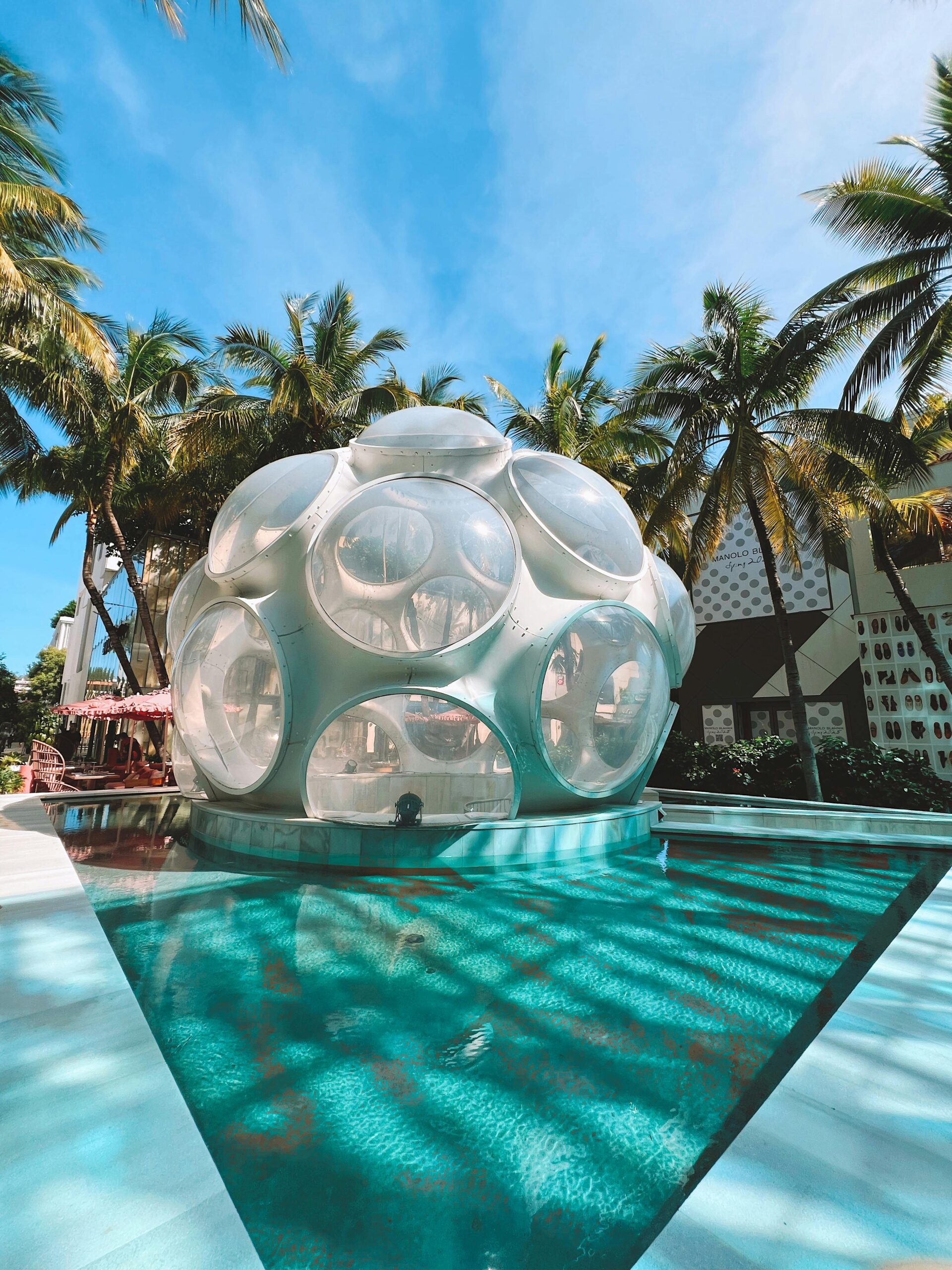
How Climate-Responsive Pool Design Works (Library Section)

The principle of climate-responsive pool design is to use environmental analysis in all the stages of planning and construction. Climate is not an external issue that will be addressed in a later design, but rather a design input.
Key Principles of Climate-Responsive Pool Design
Climate-responsive design has its basis in the interaction of natural forces with water. The behavior of a pool on a daily and seasonal basis is affected by the sun, wind, temperature, and rain. These forces are balanced by proper design to achieve stable conditions of water with the least mechanical intervention.
Sun Path Orientation and Solar Heat Control
The sun is among the most effective factors affecting the pool temperature. Climate-responsive pools follow the direction of maximizing the useful sunlight and reducing unnecessary heat gain. Pools can be laid down in cooler climates in such a way that they capture a greater number of full sunshine hours. In warmer climates, the design plans are aimed at regulating exposure through orientation, shading, and reflective finishes. Planning of the correct sun path saves the use of heaters and the resulting discomfort when overheated during the high summer seasons.
Wind Analysis and Evaporation Reduction
Wind causes a considerable heat loss and water evaporation. Climate-responsive design research considers the direction of winds and their velocity, and places pools in ways that result in less exposure. Placed strategically around the buildings, walls, or landscape, windbreaks can be used to establish more relaxed microclimates around the pool. Controlling wind reduces water loss, chemical usage, and heating directly.
Temperature Regulation and Heat Retention
A properly planned climate-responsive pool has constant water temperatures with a low amount of energy required. This is done with a careful depth design, insulated buildings, heat reflecting materials, and covers that are intelligent. Deeper areas have a longer holding capacity of heat, and appropriate insulation of the ground eliminates loss of heat. The pool itself is more effective in maintaining temperature compared to having to reheat the stored water.
Rainfall, Drainage, and Water Management
The rain patterns affect water balance, deck drainage, and overflow systems. Climate-responsive pools consist of effective drainage slopes, overflow channels, and diversion systems to stop the flood, contamination, and damage. In high rainfall areas, correct control of water is a safeguard to the pool structure and the environment around the pool.
Core Design Elements (Library / Technical Depth)

Physical design choices are critical to performance that is climate-responsive. These are key factors that determine the behavior of the pool with the environment generated over decades of use.
Essential Components of Climate-Responsive Pool Design
Each of the components, such as geometry and materials, contributes to energy efficiency, comfort, and durability. The response of pools to climate has no single characteristic but rather a combination of all the characteristics.
Pool Shape, Depth, and Placement
Uneven forms may enhance surface area, which contributes to an increase in the rate of evaporation and heat loss. Climate-responsive designs tend to be compact in size, which has the benefit of minimizing exposure whilst remaining functional and aesthetically satisfying. The variation of depth is employed strategically to control the amount of heat-retention and comfort to the swimmers. Placement is also very crucial. The placement of pools is done to exploit the natural shelter and the sun exposure, as well as the contours of the terrain.
Climate-Adaptive Materials and Finishes
Materials should not be affected by the stresses of local climate, including UV rays, temperature variations, dew, and salinity. In hot climates, the light colors are used as finishes to reflect the excess heat, whereas the darker colors can be used in cooler regions to absorb the warmth. Use of materials that are climate-appropriate will minimize cracking, fading, and maintenance expenses in the long run.
Landscaping and Natural Wind Barriers
Landscaping is not just a decorative tool; it is a working climate tool. Walls, trees, and hedges serve as wind buffers, shading facilities, and temperature regulators. The proper landscaping provides a fixed microclimate that improves the comfort of the pool all year round.
Shade Structures and Canopy Systems
Pergolas, canopies, and architectural shading minimize the direct sun gain during the hot hours. Shading systems can be adjusted, which means that they can be used during the summer and offer some protection during the colder season, and allow sunlight to enter during that time.
Technology Used in Climate-Responsive Pool Design
The contemporary technology complements the climate-responsive principles with precision and automation.
Smart Technologies Supporting Climate-Responsive Pool Design
Technology enables the pools to be dynamically reactive to the changing weather patterns; hence, efficiency is enhanced without necessarily having to use manpower.
Automated Heating and Cooling Systems
Smart heaters and heat pumps can regulate the output depending on real-time temperature information. This will save unnecessary consumption of energy and ensure the water is always comfortable.
Solar and Hybrid Pool Heating
Solar heating systems embrace the use of natural energy, whereas hybrid systems use solar energy together with heat pumps to ensure reliability. They are especially efficient in climate-responsive designs since the pool itself is maximized to keep the heat that is captured.
Smart Covers and Evaporation Control
Automated covers minimize evaporation, preserve heat, and conserve the water quality. Covering can reduce tremendously the loss of energy and water when incorporated with climate-responsive design.
Climate-Based Pool Automation Systems
The more sophisticated automation systems are used to regulate weather conditions, water temperature, and utilization to automatically adjust pumps, heaters, and covers to fit the environment.
Climate-Specific Pool Design Strategies
The design of climate responsive pool varies in response to different regions.

Design of Climate-responsive Pool in various environments
There is no standard design. Effective pools respond to their climatic conditions.
Hot and Arid Climate Pool Design
In hot, dry areas, the emphasis is put on evaporation and overheating reduction. It is necessary to provide deep pools, shadows, wind protection, and evaporation-cutting covers.
Tropical and Humid Climate Pool Design
Humidity enhances the growth of algae and erosion. The designs are concerned with improved circulation, waterproof materials, and rainwater management.
Cold and Seasonal Climate Pool Design
Low temperatures are insulated, heat-retaining, and seasonally shielded. Covers and pool enclosures will expand the lifespan and preserve buildings.
Coastal and High-Wind Area Pool Design
Exposure to salt and high winds requires anti-corrosive materials, strengthening of structures, and tough wind curbing measures.
Real-World Applications of Climate-Responsive Pool Design
The performance required in various environments will vary.
Climate Responsive residential pool design
It saves the energy bills of owners, the swimming season is extended even more, and comfort is provided with minimum maintenance.
Hotel and Resort Climate Responsive Design
Hotels focus on the comfort of guests, efficiency of the business, and beauty. Climate-sensitive pools are also cost-effective in terms of operation and increase the luxury experience.
Public and Community Pool Applications
Public pools are aimed at cost control, durability, and safety. Climate-responsive architecture guarantees the sustainability of the structure in areas of heavy traffic.
Benefits & ROI (Decision-Stage SEO)
The climate-responsive pools offer quantifiable benefits beyond their aesthetic appeal.
Benefits of Climate-Responsive Pool Design
The advantages are both financial, environmental, and experiential.
Energy and Cost Savings
Less heating, pumping, and water replacement will result in great savings in the long run.
Improved User Comfort and Safety
Reduced glare and constant temperatures, combined with smoother waters, make the swimmers much more comfortable and secure.
Sustainability and Environmental Impact
Reduced energy consumption, lower water usage, and extended material life lead to a lower environmental impact.
Property Value and Long-Term Performance
Climate-responsive pools are less expensive to operate, increasing property value with age, and are more efficient in long-term maintenance.
Common Mistakes and Design Challenges
Even designs that are well-meaning fail when the climate factors are not taken into consideration.
Common Mistakes in Climate-Responsive Pool Design
Errors are usually a result of ineffective planning and not ineffective performance.
Ignoring Local Climate Data
Whereas generic designs do not work where the weather patterns of a region are not analyzed.
Poor Orientation and Wind Exposure
Poor positioning will result in overevaporation and inconvenience.
Overlooking Material Suitability
The materials that are not appropriate to the climatic conditions wear out easily and increase the costs.
Future Trends in Climate-Responsive Pool Design
The future of the design of the pools is more intelligent and sustainable.
Future of Climate-Responsive Pool Design
The pools are being driven towards independence and sustainable development by innovation.
AI-Driven Climate Analysis
AI will streamline design and operation according to the prediction of the climate.
Net-Zero and Carbon-Neutral Pools
The goal of future pools is to generate the same amount of energy that they generate.
Self-Regulating Pool Systems
Temperature and circulation, as well as water quality, will be automated by pools.
Is Climate-Responsive Pool Design Worth It?
Climate-Responsive Pool Design is neither a fad nor a fashion; it is a solid, futuristic way of building a pool. It provides comfort, efficiency, durability, and sustainability all on a single integrated approach. To homeowners and developers as much as communities, the importance of investing in climate-sensitive design is to construct a pool that works well today and will be able to withstand tomorrow. Climate-responsive pools are worth the cost in a world of shifting climates and increasing resource prices, but in fact, they are necessary.
FAQs
1. What is Climate-Responsive Pool Design?
One of the strategies to help enhance the comfort, efficiency, and durability of pools is climate-Responsive Pool Design that is a strategy that transforms pool layout, materials, and systems in response to local climatic conditions.
2. Does it mean that Climate-Responsive Pool Design applies to all climates?
Yes, it is efficient in hot, cold, humid, and coastal climates since designs are adopted to suit local climatic conditions.
3. Does Climate-Responsive Pool Design reduce water loss?
Yes, smart orientation, wind barriersa and pool covers minimally decrease evaporation and water wastage.
4. Are pools responsive to climate, more costly to construct?
The initial costs may be a bit higher, however, in the long run, it will be cost-effective as the energy, water, andmaintenance costst will be minimized.
5. Is it possible to upgrade the existing pools so that they become responsive to the climate?
Yes, it can be improvedby enhancinge the existing pools with smart covers, solar heating, landscaping, and automation.